Catahoula Leopard Dog: The Complete Owner’s Guide
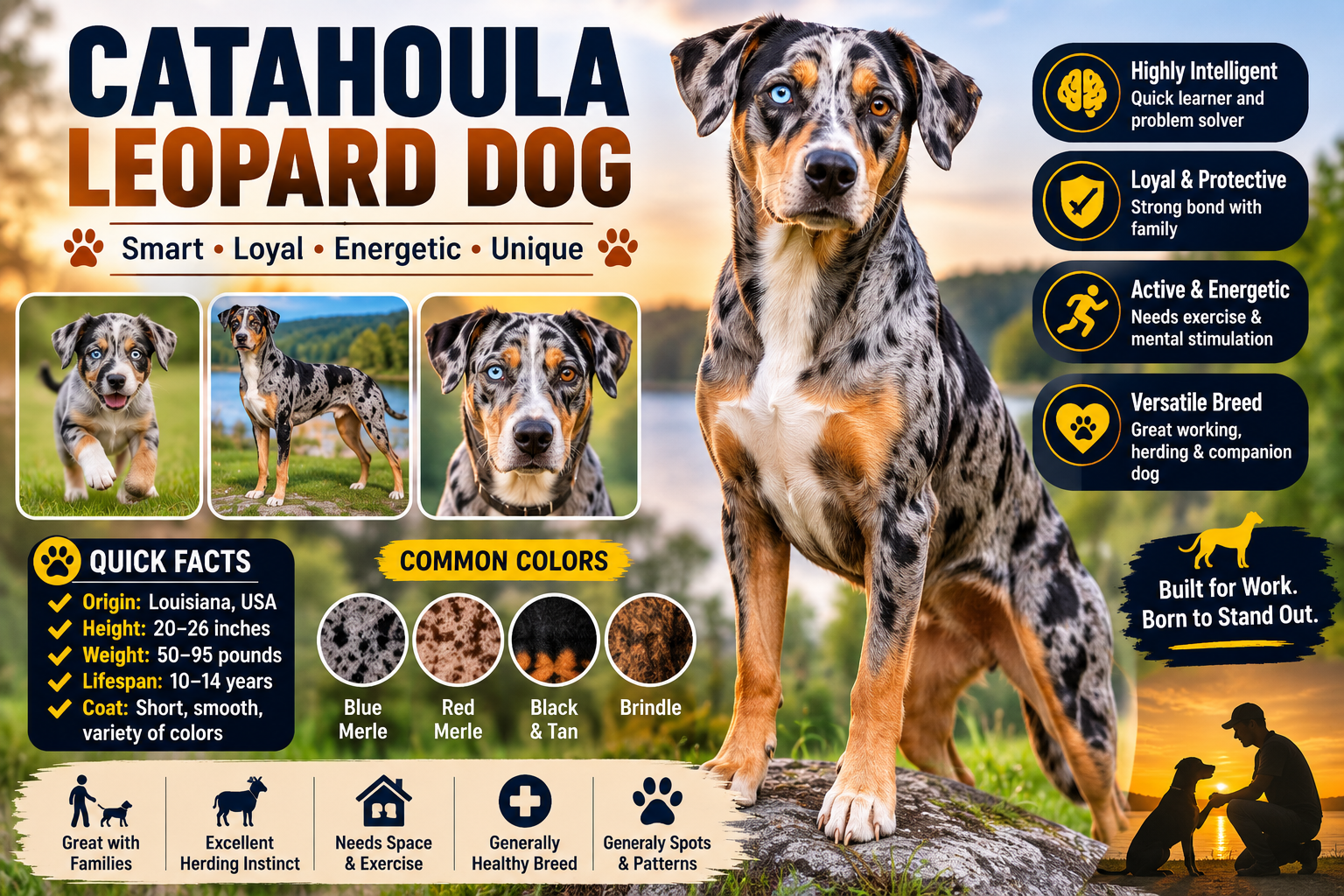
The Catahoula Leopard Dog is one of America’s most unique and versatile working breeds. Known for its striking coat patterns, mesmerizing eyes, and unmatched intelligence, this breed has earned a reputation as a dependable hunting, herding, and family companion. Originally developed in Louisiana, the Catahoula Leopard Dog combines strength, endurance, loyalty, and independence into one remarkable package.
Whether you’re considering bringing one home or simply want to learn more, understanding this breed’s personality, exercise requirements, health concerns, and training style is essential. Unlike many companion breeds, the Catahoula thrives when given a purpose and regular mental stimulation. This comprehensive guide explores everything prospective and current owners should know, helping you decide whether this energetic and hardworking dog is the right fit for your lifestyle.
What Is a Catahoula Leopard Dog?
The Catahoula Leopard Dog is a medium-to-large working breed that originated in Louisiana, USA. It was bred primarily to herd livestock, hunt wild hogs, and assist farmers with demanding outdoor tasks. The breed is famous for its athletic build, exceptional stamina, and natural problem-solving abilities.
Its name comes from Catahoula Parish in Louisiana, where the breed was developed. Although commonly called the Louisiana Catahoula Leopard Dog, many people simply refer to it as the Catahoula.
One of the breed’s most recognizable features is its distinctive “leopard” coat pattern, though not every dog displays traditional leopard markings. Coat colors and eye colors vary widely, making each individual dog visually unique.
History and Origin
The history of the Catahoula Leopard Dog dates back several centuries. Historians believe the breed resulted from crosses between Native American dogs and European breeds brought by early Spanish and French settlers.
Over time, selective breeding emphasized:
- Herding instincts
- Hunting ability
- Intelligence
- Physical endurance
- Independence
- Adaptability
Farmers relied on these dogs to manage cattle across difficult terrain and track wild game. Their versatility made them indispensable on southern farms and ranches.
Today, Louisiana proudly recognizes the Catahoula Leopard Dog as its official state dog, reflecting its deep cultural significance.
Physical Characteristics
The Catahoula Leopard Dog possesses a powerful yet agile body designed for demanding work.
Size
Most adult males stand between 22 and 26 inches tall.
Females generally measure 20 to 24 inches.
Weight
Depending on genetics and activity level, adults typically weigh:
- 50–95 pounds
- Males generally weigh more than females
Coat
The breed has a short to medium-length coat that’s relatively easy to maintain.
Common coat colors include:
- Blue merle
- Red merle
- Brindle
- Black
- Chocolate
- White patches
- Tan points
- Gray
- Yellow
Eyes
One of the breed’s signature traits is its eye color.
Possible eye colors include:
- Blue
- Brown
- Green
- Amber
- Cracked eyes (multiple colors)
- Glass eyes
Many Catahoulas have two completely different colored eyes, adding to their unique appearance.
Catahoula Leopard Dog Temperament
The Catahoula Leopard Dog is intelligent, confident, and incredibly loyal to its family.
Unlike overly social breeds, Catahoulas often develop deep bonds with their owners while remaining cautious around strangers.
Their personality can be described as:
- Protective
- Alert
- Independent
- Fearless
- Hardworking
- Curious
- Energetic
Because they were bred to think independently while working livestock, they don’t blindly obey commands. Instead, they evaluate situations before responding, making consistent training especially important.
Are Catahoula Leopard Dogs Good Family Pets?
Yes—but only for the right households.
This breed thrives with active families who enjoy outdoor adventures and can provide daily physical and mental challenges.
They generally do well with:
- Experienced dog owners
- Active couples
- Families with older children
- People living on acreage
- Outdoor enthusiasts
They may not be ideal for:
- Apartment living
- First-time dog owners
- Sedentary lifestyles
- Families unable to provide exercise
- Homes where dogs remain alone all day
When properly socialized, they become affectionate, protective companions.
Exercise Requirements
The Catahoula Leopard Dog has exceptionally high energy levels.
Most adults require:
- 90–120 minutes of exercise daily
- Interactive play sessions
- Running opportunities
- Hiking
- Swimming
- Herding activities
- Advanced obedience work
Without sufficient exercise, boredom often leads to:
- Excessive barking
- Digging
- Destructive chewing
- Escaping fences
- Hyperactivity
Mental stimulation is equally important.
Great enrichment activities include:
- Puzzle feeders
- Scent work
- Agility courses
- Tracking games
- Hide-and-seek
- Obstacle training
Training Tips
Training should begin as early as possible.
Because this breed is intelligent yet independent, owners must combine consistency with positive reinforcement.
Effective Training Strategies
- Reward good behavior immediately.
- Keep sessions short and engaging.
- Begin socialization early.
- Teach impulse control.
- Introduce new environments regularly.
- Avoid harsh punishment.
- Maintain consistent household rules.
Early obedience training helps prevent stubborn behaviors from becoming long-term habits.
Socialization
Proper socialization shapes a confident and balanced adult dog.
Expose puppies to:
- Children
- Adults
- Other dogs
- Different surfaces
- Vehicles
- Parks
- Veterinary clinics
- Loud sounds
Positive experiences during puppyhood greatly reduce fearfulness and aggression later in life.
Grooming Needs
Despite their striking appearance, Catahoula Leopard Dogs require relatively little grooming.
Weekly Care
- Brush once or twice weekly.
- Check ears regularly.
- Trim nails every month.
- Brush teeth several times weekly.
- Inspect paws after outdoor adventures.
Bathing
Bathing every six to eight weeks is usually enough unless the dog becomes particularly dirty.
Frequent bathing may strip natural skin oils.
Feeding Requirements
A balanced, high-quality diet supports the breed’s muscular build and active lifestyle.
Nutritional priorities include:
- High-quality protein
- Healthy fats
- Digestible carbohydrates
- Omega fatty acids
- Vitamins and minerals
Food quantity depends on:
- Age
- Weight
- Activity level
- Health condition
Avoid excessive treats to prevent obesity.
Fresh drinking water should always be available.
Common Health Issues
The Catahoula Leopard Dog is generally healthy but can inherit certain conditions.
Potential health concerns include:
Hip Dysplasia
Improper hip joint development can cause pain and reduced mobility.
Deafness
Dogs with excessive white coloration may have congenital hearing loss.
Eye Disorders
Occasional inherited eye conditions can affect vision.
Elbow Dysplasia
Abnormal elbow joint formation may limit movement.
Obesity
Insufficient exercise combined with overfeeding increases weight-related problems.
Regular veterinary checkups help detect these conditions early.
Average Lifespan
Most Catahoula Leopard Dogs live:
10–14 years
Proper nutrition, exercise, preventive healthcare, and responsible breeding can contribute to a longer lifespan.
Living Environment
The ideal home offers room to explore and work.
Best living situations include:
- Rural homes
- Farms
- Large fenced yards
- Active suburban households
They generally dislike being confined for long periods.
Secure fencing is essential because these dogs are excellent climbers and explorers.
Are They Good With Children?
When raised with children and properly socialized, Catahoulas can be patient and affectionate.
However, supervision is important because:
- They are powerful dogs.
- Herding instincts may encourage chasing.
- Rough play can accidentally knock over young children.
Teaching both children and dogs respectful interaction creates the safest environment.
Are They Good With Other Pets?
The answer depends largely on early socialization.
Many Catahoulas peacefully coexist with:
- Other dogs
- Farm animals
- Horses
However, their hunting instincts may lead them to chase:
- Cats
- Rabbits
- Small rodents
- Backyard wildlife
Careful introductions and ongoing supervision are recommended.
Catahoula Leopard Dog Colors
One reason this breed attracts attention is its incredible coat variety.
Popular colors include:
- Blue leopard
- Red leopard
- Black
- Chocolate
- Yellow
- Gray
- Brindle
- Merle
- White with patches
- Tan combinations
No two dogs look exactly alike.
Intelligence and Working Ability
The Catahoula Leopard Dog ranks among America’s smartest working breeds.
Its intelligence shines in:
- Livestock management
- Search and rescue
- Hunting
- Agility
- Dock diving
- Tracking
- Scent detection
- Competitive obedience
These dogs enjoy solving problems rather than performing repetitive tasks.
Keeping training varied helps maintain motivation.
Pros and Cons of Owning a Catahoula Leopard Dog
Pros
- Extremely loyal
- Highly intelligent
- Excellent working ability
- Athletic and energetic
- Low grooming needs
- Protective family companion
- Beautiful coat patterns
- Adaptable to outdoor lifestyles
Cons
- Requires extensive daily exercise
- Independent personality
- Can be stubborn
- Needs early socialization
- Strong prey drive
- Not ideal for apartment living
- May become destructive if bored
Is the Catahoula Leopard Dog Right for You?
Before choosing this breed, ask yourself several important questions.
Can you provide at least two hours of daily activity?
Do you enjoy hiking, running, or outdoor adventures?
Are you comfortable training an intelligent but independent dog?
Do you have enough space for an active working breed?
Can you commit to consistent socialization and lifelong enrichment?
If the answer is yes, the Catahoula Leopard Dog can become an exceptionally rewarding companion. Owners who embrace the breed’s working heritage often discover an affectionate, dependable, and remarkably capable partner that thrives on purpose and close family bonds.
Conclusion
The Catahoula Leopard Dog stands out as one of the most distinctive working breeds in the United States. Its combination of intelligence, endurance, loyalty, and striking appearance makes it an outstanding companion for active owners willing to invest time in training and exercise. While it isn’t the right choice for every household, those who understand the breed’s needs are rewarded with a devoted dog that excels in work, sports, and family life. By providing proper socialization, consistent leadership, quality nutrition, and plenty of physical and mental stimulation, you can help your Catahoula thrive for many healthy and happy years.
Frequently Asked Questions
Is a Catahoula Leopard Dog a good family dog?
Yes. The breed can be an excellent family companion for active households that provide regular exercise, training, and early socialization. It typically forms strong bonds with its family and is naturally protective.
How much exercise does a Catahoula Leopard Dog need?
Most adult Catahoulas require 90 to 120 minutes of physical activity every day, along with mental enrichment through training, puzzle toys, scent work, or interactive games.
Are Catahoula Leopard Dogs aggressive?
They are not naturally aggressive, but they are protective and reserved with strangers. Proper socialization and positive training from an early age help them develop into confident, well-mannered adults.
Do Catahoula Leopard Dogs shed a lot?
They are moderate shedders. Weekly brushing is usually enough to remove loose hair and keep the coat healthy throughout the year.
Can a Catahoula Leopard Dog live in an apartment?
Apartment living is generally not recommended. This energetic working breed performs best in homes with large fenced yards or access to open spaces where it can exercise and explore daily.