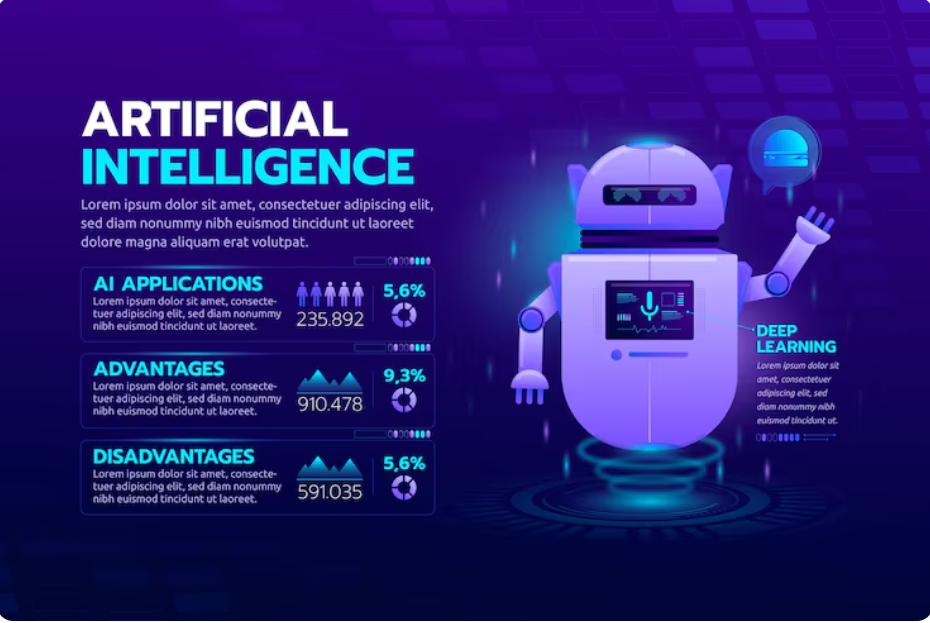
Artificial Intelligence: Transforming the Future of Technology
Introduction to Artificial Intelligence
Artificial Intelligence, commonly known as AI, is a branch of technology that focuses on creating machines capable of performing tasks that normally require human intelligence. These tasks include learning, reasoning, problem solving, understanding language, and recognizing patterns. Over the years, Artificial Intelligence has evolved from a theoretical concept into a practical technology that influences many aspects of modern life. Its rapid growth is changing how technology is developed and how it interacts with society.
How Artificial Intelligence Works
Artificial Intelligence functions by combining data, algorithms, and computing power. Machines are trained using large sets of data so they can learn from examples and improve their performance over time. This process is called machine learning. Another important area is deep learning, which uses complex systems inspired by the human brain to process information. Through these methods, AI systems can analyze data, make predictions, and adapt to new situations without direct human instructions.
Artificial Intelligence in Everyday Life
Artificial Intelligence has become a regular part of daily activities. Smartphones use AI for voice recognition, camera enhancements, and virtual assistants. Online platforms rely on AI to suggest videos, music, and products based on user preferences. Navigation apps use AI to analyze traffic patterns and provide faster routes. These applications help save time, improve convenience, and create more personalized experiences for users.
Impact of Artificial Intelligence on Industries
Artificial Intelligence is transforming various industries by increasing efficiency and accuracy. In healthcare, AI helps doctors diagnose diseases, analyze medical images, and monitor patient health. In agriculture, AI systems assist farmers in predicting weather conditions, detecting crop diseases, and improving yields. Manufacturing industries use AI powered robots to perform repetitive tasks with precision, reducing errors and increasing productivity.
Role of Artificial Intelligence in Business and Economy
Businesses across the world are using Artificial Intelligence to improve operations and decision making. AI helps companies analyze customer behavior, manage inventory, and optimize supply chains. Customer service has improved with the use of AI chatbots that provide instant support. In the financial sector, AI is used to detect fraud, assess risks, and manage investments. These advancements help businesses grow while reducing costs and risks.
Artificial Intelligence in Education
The education sector is also benefiting from Artificial Intelligence. AI powered learning platforms provide personalized study plans based on individual learning styles and performance. Students receive instant feedback, helping them understand their strengths and weaknesses. Teachers can use AI tools to reduce administrative work, allowing more time for teaching and mentoring. This makes education more accessible and effective for learners of different backgrounds.
Challenges and Ethical Concerns
Despite its advantages, Artificial Intelligence presents several challenges. One concern is job displacement, as machines can perform tasks once done by humans. While some jobs may disappear, new opportunities are also created in technology related fields. Another challenge involves data privacy and security. AI systems rely heavily on data, and improper use of personal information can lead to serious issues. Bias in AI systems is also a concern if the data used for training is unfair or incomplete. Addressing these challenges requires responsible development and strong ethical guidelines.
Future of Artificial Intelligence
The future of Artificial Intelligence holds great potential. Continued research and innovation are expected to make AI systems more advanced and reliable. AI may play a key role in solving global problems such as climate change, healthcare access, and resource management. However, human oversight and ethical considerations will remain essential to ensure that AI benefits society as a whole.
Conclusion
Artificial Intelligence is transforming the future of technology by reshaping how people live, work, and interact with the world. From everyday applications to complex industrial systems, AI has become an essential part of modern life. While challenges and concerns exist, responsible and ethical use of Artificial Intelligence can lead to positive outcomes. By guiding its development wisely, society can ensure that AI supports human progress and creates a better, more efficient future.