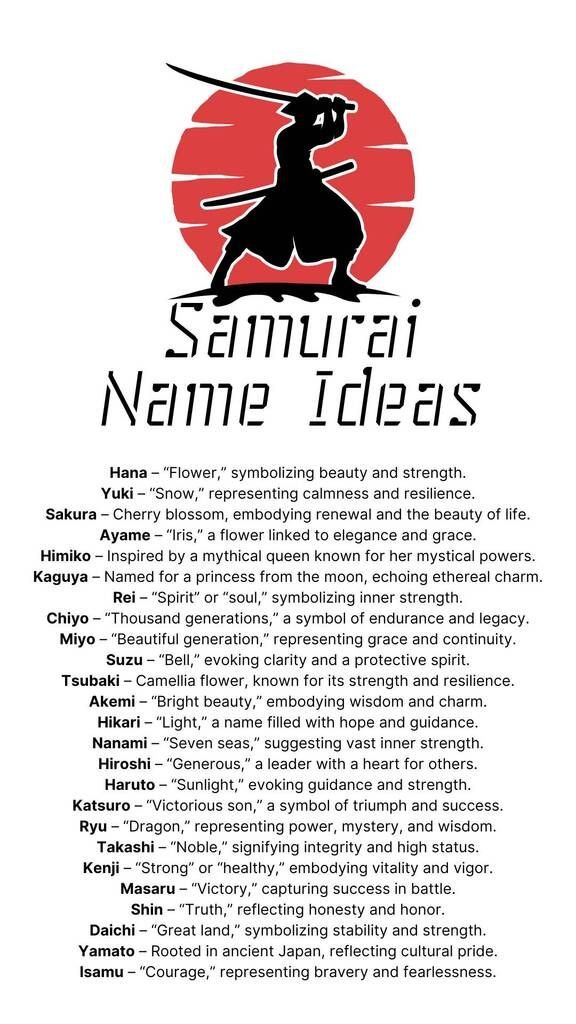
Samurai Names Meaning Origins and Traditional Japanese Warrior Names
Samurai names reflect the rich history and culture of feudal Japan. The samurai were members of the warrior class who served powerful lords for centuries, following a strict code of honor known as Bushidō. Their names often carried meanings related to strength, courage, loyalty, wisdom, nature, or family heritage.
Today, people search for samurai names for historical research, novels, video games, role-playing characters, martial arts, or simply to learn more about Japanese culture. This guide explores the origins of samurai names, their meanings, and examples inspired by history.
What Are Samurai Names?
Samurai names are the personal and family names used by members of Japan’s warrior class. Many samurai belonged to noble clans and inherited family names that represented their lineage.
A samurai’s name often reflected:
- Family heritage
- Social status
- Regional identity
- Personal virtues
- Military achievements
In some cases, samurai also adopted new names during important stages of their lives.
How Samurai Names Were Structured
Traditional Japanese names generally consist of:
- Family name (surname)
- Given name
Historically, the family name was especially important because it identified a samurai’s clan and ancestry.
Famous Samurai Names in History
Several legendary samurai remain well known today:
- Miyamoto Musashi
- Oda Nobunaga
- Tokugawa Ieyasu
- Takeda Shingen
- Uesugi Kenshin
- Date Masamune
- Sanada Yukimura
- Honda Tadakatsu
- Hattori Hanzō
- Saigō Takamori
These historical figures are remembered for their leadership, military strategy, and influence on Japanese history.
Popular Samurai-Inspired Male Names
Many Japanese names are associated with qualities admired in samurai culture.
| Name | Meaning |
|---|---|
| Haruto | Sun and flight |
| Kaito | Ocean and soar |
| Ren | Lotus |
| Takumi | Skilled artisan |
| Daiki | Great brightness |
| Hayato | Falcon person |
| Akio | Bright hero |
| Isamu | Courage |
| Katsuro | Victorious son |
| Masaru | Victory |
While not all of these were exclusively used by samurai, they carry meanings often associated with strength and honor.
Popular Samurai-Inspired Female Names
Although the samurai class was predominantly male, women from samurai families also played important roles.
Examples include:
| Name | Meaning |
|---|---|
| Aiko | Beloved child |
| Emi | Beautiful blessing |
| Kaede | Maple leaf |
| Hana | Flower |
| Yuki | Happiness or snow |
| Sakura | Cherry blossom |
| Naomi | Honest beauty |
| Chiyo | Thousand generations |
| Akemi | Bright beauty |
| Reiko | Grateful child |
These names remain popular in Japan today.
Themes Found in Samurai Names
Many samurai names were inspired by:
- Nature
- Mountains
- Rivers
- Strength
- Honor
- Loyalty
- Wisdom
- Courage
- Victory
- Family heritage
These themes reflected the values of the warrior class.
Choosing a Samurai-Inspired Name
If you’re selecting a samurai-inspired name for a story, game, or creative project:
- Research authentic Japanese names.
- Understand the meaning behind the name.
- Respect Japanese culture and history.
- Consider the historical period.
- Match the name to the character’s personality.
Authenticity helps create more believable characters.
Samurai Naming Traditions
Historically, samurai could receive new names during:
- Coming-of-age ceremonies
- Adoption into another family
- Military promotions
- Marriage
- Significant achievements
These name changes often reflected changes in status or responsibility.
Final Thoughts
Samurai names are deeply connected to Japan’s history, culture, and warrior traditions. Whether you’re studying Japanese history, writing a novel, creating a game character, or simply exploring meaningful names, understanding their origins adds depth and authenticity. Many names associated with samurai continue to inspire people today because of their connections to honor, courage, discipline, and loyalty.
Frequently Asked Questions
What are samurai names?
Samurai names are the personal and family names historically used by members of Japan’s warrior class.
Did all samurai have family names?
Most samurai belonged to families or clans and used surnames that reflected their lineage.
Who was the most famous samurai?
Many historians consider Miyamoto Musashi one of the most famous samurai because of his swordsmanship and writings.
What does Bushidō mean?
Bushidō refers to the traditional moral code followed by samurai, emphasizing honor, loyalty, courage, and discipline.
Can I use samurai names for fictional characters?
Yes. Many writers and game developers use authentic Japanese names inspired by samurai history.
Were female samurai real?
Yes. Some women from samurai families, often called onna-bugeisha, were trained in martial arts and defended their families and communities.
Do samurai names have meanings?
Yes. Many Japanese names have meanings connected to nature, strength, wisdom, honor, or other positive qualities.
Are samurai names still used today?
Many historical names remain well known, while modern Japanese names often share similar cultural meanings.
Why did samurai sometimes change their names?
Name changes could occur after coming of age, marriage, adoption, promotions, or important life events.
How do I choose an authentic samurai name?
Research historical Japanese names, understand their meanings, and consider the historical setting and cultural context of your project.