What Is Content Creation? A Complete Guide for Beginners and Professionals
If you’ve ever written a blog post, recorded a YouTube video, designed an Instagram post, launched a podcast, or published an email newsletter, you’ve participated in content creation. But what is content creation exactly, and why has it become one of the most valuable digital skills today?
Content creation is more than simply producing words or videos. It involves researching audience needs, planning valuable information, creating engaging material, optimizing it for search engines and social platforms, and measuring performance to improve future results.
Whether you’re a business owner, freelancer, marketer, influencer, educator, or someone looking to build a personal brand, understanding content creation can help you attract an audience, build trust, generate leads, and grow online. This guide explains everything you need to know—from the basics to advanced strategies—so you can create content that people genuinely want to consume.
What Is Content Creation?
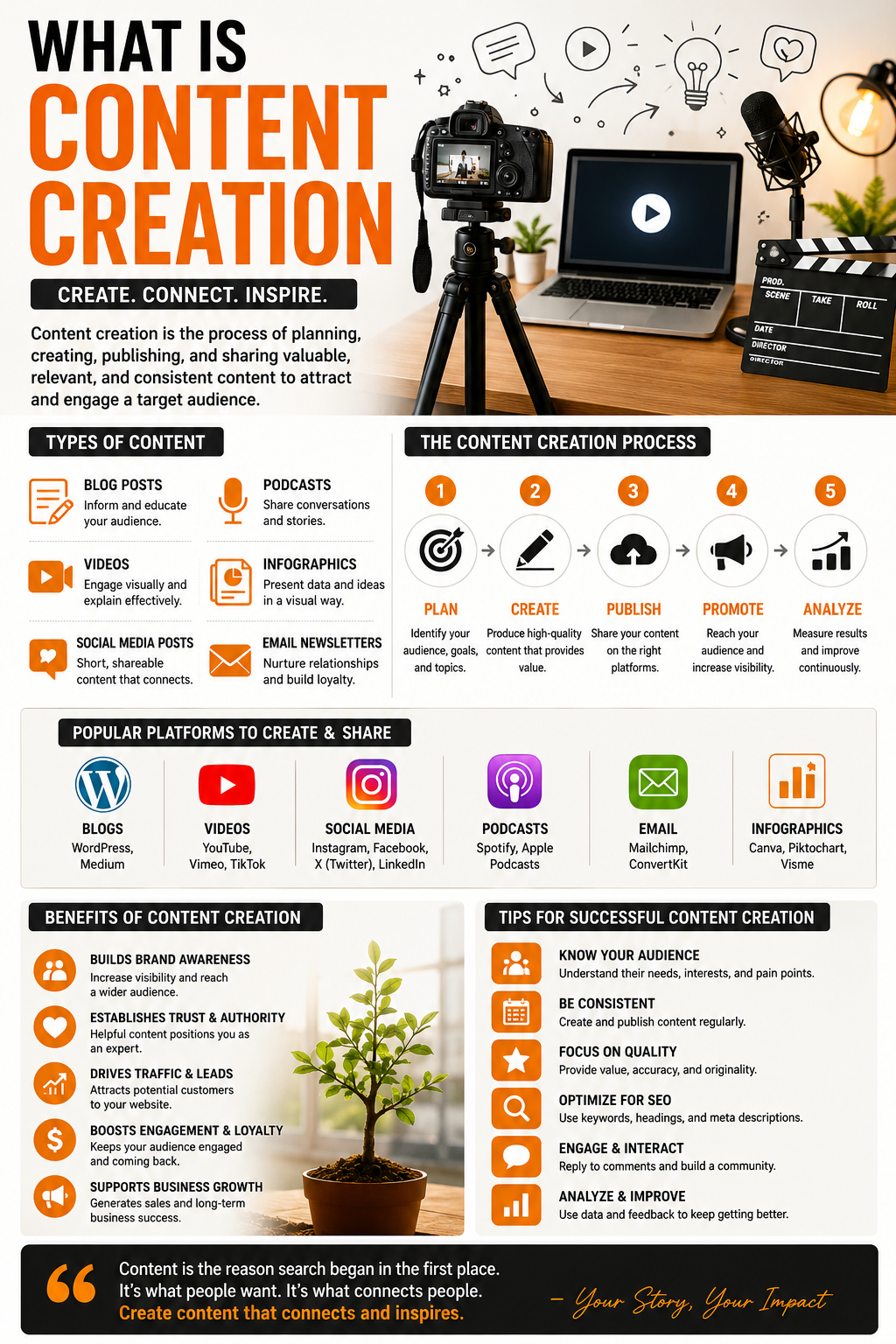
Content creation is the process of planning, producing, publishing, and managing digital content designed to educate, entertain, inform, or inspire a specific audience.
The content may appear in many formats, including:
- Blog articles
- Videos
- Podcasts
- Social media posts
- Infographics
- Email newsletters
- Case studies
- eBooks
- Webinars
- Product guides
- Online courses
The ultimate purpose is to provide value while helping achieve a personal or business goal, such as increasing website traffic, building authority, generating leads, improving customer engagement, or driving sales.
Featured Snippet Answer
Content creation is the process of researching, planning, producing, publishing, and optimizing digital content for a target audience. It includes blogs, videos, podcasts, social media posts, emails, and other content formats designed to educate, entertain, or promote a brand while achieving marketing or communication goals.
Why Content Creation Is So Important
The internet runs on content. Every Google search, YouTube tutorial, Instagram Reel, LinkedIn article, and TikTok video exists because someone created it.
High-quality content helps:
- Build credibility and trust
- Improve search engine rankings
- Increase organic website traffic
- Generate qualified leads
- Strengthen customer relationships
- Educate potential buyers
- Support long-term business growth
- Improve brand recognition
- Increase social media engagement
- Establish industry authority
Instead of interrupting people with advertisements, content attracts people naturally by solving their problems.
Types of Content Creation
Different audiences consume information in different ways. Successful creators usually combine multiple content formats.
Blog Content
Blog posts remain one of the most effective ways to attract organic traffic through search engines.
Examples include:
- How-to guides
- Tutorials
- Product reviews
- Comparison articles
- Industry news
- Beginner guides
- Expert interviews
Video Content
Video has become one of the fastest-growing forms of digital content.
Popular formats include:
- YouTube videos
- Short-form videos
- Tutorials
- Product demonstrations
- Vlogs
- Interviews
- Live streams
Social Media Content
Social platforms allow creators to connect directly with their audience.
Common content includes:
- Images
- Carousels
- Reels
- Stories
- Polls
- Memes
- Educational graphics
Email Content
Email remains one of the highest-converting marketing channels.
Content examples include:
- Weekly newsletters
- Promotions
- Product announcements
- Educational sequences
- Customer onboarding emails
Podcast Content
Podcasts help creators build deeper relationships through conversations and storytelling.
Visual Content
Visual assets increase engagement and improve understanding.
Examples include:
- Infographics
- Charts
- Presentations
- Illustrations
- Custom graphics
- Data visualizations
The Content Creation Process
Creating valuable content involves much more than simply writing.
Research Your Audience
Understand:
- Their problems
- Goals
- Questions
- Interests
- Search intent
- Preferred platforms
The better you know your audience, the more useful your content becomes.
Choose a Content Topic
Select topics based on:
- Keyword research
- Audience questions
- Industry trends
- Customer feedback
- Competitor analysis
Aim to answer questions more thoroughly than existing content.
Create an Outline
A structured outline keeps the article organized and easier to read.
Include:
- Introduction
- Main sections
- Supporting examples
- FAQs
- Conclusion
Produce High-Quality Content
Focus on:
- Accuracy
- Original insights
- Practical examples
- Clear language
- Easy readability
Avoid unnecessary jargon unless your audience expects technical explanations.
Optimize for SEO
Search engine optimization improves discoverability.
Important SEO elements include:
- Primary keyword placement
- Relevant secondary keywords
- Internal linking
- Optimized headings
- Meta description
- Image alt text
- Fast-loading pages
Publish and Promote
Publishing is only the beginning.
Promote content through:
- Social media
- Email newsletters
- Online communities
- Industry forums
- Partnerships
- Content repurposing
Measure Performance
Track metrics such as:
- Organic traffic
- Engagement time
- Bounce rate
- Click-through rate
- Conversion rate
- Shares
- Backlinks
Use performance data to improve future content.
Essential Skills Every Content Creator Needs
Successful creators continuously develop multiple skills.
Writing
Strong writing improves clarity, engagement, and authority.
Research
Reliable information builds trust and credibility.
SEO Knowledge
Understanding search intent and keyword optimization increases visibility.
Storytelling
Stories make information memorable and emotionally engaging.
Graphic Design
Simple visuals improve content quality and user experience.
Video Editing
Basic editing skills can dramatically improve video performance.
Communication
Great creators know how to explain complex ideas simply.
Data Analysis
Performance metrics reveal what works and what needs improvement.
Popular Content Creation Tools
Modern creators rely on various tools to simplify workflows.
Writing Tools
- Google Docs
- Microsoft Word
- Grammarly
- Notion
Graphic Design Tools
- Canva
- Adobe Express
- Figma
Video Editing Tools
- CapCut
- Adobe Premiere Pro
- DaVinci Resolve
SEO Tools
- Google Search Console
- Google Analytics
- Ahrefs
- SEMrush
Social Media Scheduling
- Buffer
- Hootsuite
- Later
AI Productivity Tools
Artificial intelligence can help with brainstorming, summarizing, proofreading, outlining, and workflow automation. However, human creativity, experience, and editing remain essential for producing trustworthy, engaging content.
What Makes Great Content?
Not every article or video succeeds.
Excellent content typically has these qualities:
- Solves a real problem
- Answers user intent completely
- Includes accurate information
- Uses original examples
- Is easy to scan
- Includes visuals where appropriate
- Is regularly updated
- Builds reader trust
- Provides actionable advice
- Encourages engagement
Readers remember helpful content—not content filled with unnecessary words.
Common Mistakes Beginners Make
Many new creators slow their growth by making avoidable mistakes.
Common errors include:
- Publishing without research
- Ignoring SEO fundamentals
- Writing for search engines instead of people
- Using clickbait headlines
- Inconsistent publishing
- Copying competitors
- Skipping proofreading
- Forgetting calls to action
- Not analyzing performance
- Giving up too early
Learning from these mistakes accelerates improvement.
How Businesses Use Content Creation
Businesses create content for many purposes.
These include:
- Building brand awareness
- Educating customers
- Supporting product launches
- Improving customer service
- Increasing website traffic
- Generating leads
- Building loyalty
- Strengthening search visibility
- Supporting sales teams
- Growing online communities
Companies that consistently publish valuable content often develop stronger customer relationships than those relying only on advertising.
Content Creation vs Content Marketing
Although closely related, these terms are different.
Content creation focuses on producing the actual material.
Examples include:
- Writing articles
- Recording videos
- Designing graphics
- Creating podcasts
Content marketing involves using that content strategically to achieve business goals.
It includes:
- Distribution
- Promotion
- Audience targeting
- Lead generation
- Conversion optimization
- Performance analysis
Simply put, content creation produces the asset, while content marketing ensures the right people see it.
How to Become a Better Content Creator
Improvement comes through consistent practice rather than shortcuts.
Practical ways to improve include:
- Publish regularly
- Read industry-leading blogs
- Study successful creators
- Learn SEO fundamentals
- Ask for audience feedback
- Analyze your best-performing content
- Improve headlines
- Practice storytelling
- Update older content
- Continue learning new tools and platforms
Every published piece teaches valuable lessons.
Future Trends in Content Creation
Digital content continues evolving rapidly.
Emerging trends include:
- AI-assisted content workflows
- Personalized content experiences
- Interactive articles
- Short-form videos
- Voice search optimization
- Community-driven content
- User-generated content
- Educational micro-content
- Data-driven content strategies
- Greater emphasis on expertise and trust
Creators who adapt while maintaining quality will remain competitive.
Conclusion
Understanding what is content creation is the first step toward building a meaningful online presence. At its core, content creation is about delivering value to a specific audience through useful, engaging, and trustworthy information. Whether you’re writing articles, recording videos, publishing podcasts, or sharing social media updates, successful content begins with understanding your audience and solving real problems.
Consistency, research, creativity, and continuous improvement are the foundations of long-term success. Instead of chasing trends alone, focus on creating content that answers questions, builds trust, and encourages action. As digital platforms continue evolving, creators who prioritize quality, authenticity, and user experience will continue to grow their audiences and achieve lasting results.
Frequently Asked Questions
What is content creation in simple words?
Content creation is the process of making digital material such as blog posts, videos, podcasts, graphics, or social media posts that educate, entertain, or inform a target audience.
What are the main types of content creation?
The most common types include blog writing, video creation, podcasting, social media content, email newsletters, infographics, eBooks, webinars, and online courses.
Why is content creation important?
Content creation helps businesses and individuals build trust, attract website visitors, improve search engine rankings, engage audiences, generate leads, and increase sales over time.
What skills are needed for content creation?
Important skills include writing, research, SEO, storytelling, communication, graphic design, video editing, creativity, and data analysis.
Is content creation a good career?
Yes. Content creation offers opportunities in digital marketing, freelance writing, social media management, video production, blogging, brand partnerships, and entrepreneurship. As businesses continue investing in digital marketing, skilled content creators remain in high demand.