Obsessive–Compulsive Disorder Treatments: A Complete Guide to What Really Works
Finding the right obsessive–compulsive disorder treatments can feel overwhelming, especially when intrusive thoughts and repetitive behaviors begin interfering with daily life. Fortunately, OCD is one of the most researched mental health conditions, and effective treatments are available. With the right combination of therapy, medication, education, and long-term support, many people experience significant improvement and regain control over their lives.
This guide explains the evidence-based treatments recommended by mental health professionals, how they work, what to expect during recovery, and practical strategies that support lasting progress. Whether you’re seeking help for yourself or someone you care about, you’ll find reliable, medically informed information that goes beyond the basics.
What Is Obsessive-Compulsive Disorder (OCD)?
Obsessive-compulsive disorder (OCD) is a chronic mental health condition characterized by two main features:
- Obsessions: Persistent, unwanted thoughts, urges, or mental images that cause anxiety or distress.
- Compulsions: Repetitive behaviors or mental rituals performed to reduce anxiety or prevent a feared outcome.
Common obsessions include:
- Fear of contamination
- Fear of harming others
- Excessive concern with symmetry
- Intrusive sexual or religious thoughts
- Fear of making mistakes
Common compulsions include:
- Excessive handwashing
- Repeated checking
- Counting rituals
- Arranging objects
- Seeking reassurance
- Mental reviewing or praying
OCD affects people differently. Symptoms can range from mild to severe and often fluctuate during periods of stress.
Why Early Treatment Matters
Without treatment, OCD often becomes more time-consuming and disruptive over time. Early intervention offers several benefits:
- Reduces symptom severity
- Improves relationships
- Enhances work or school performance
- Lowers the risk of depression and anxiety
- Improves overall quality of life
Many people wait years before seeking help because they feel embarrassed or believe their thoughts define who they are. In reality, intrusive thoughts are symptoms of OCD, not reflections of personal values or intentions.
The Most Effective OCD Treatments
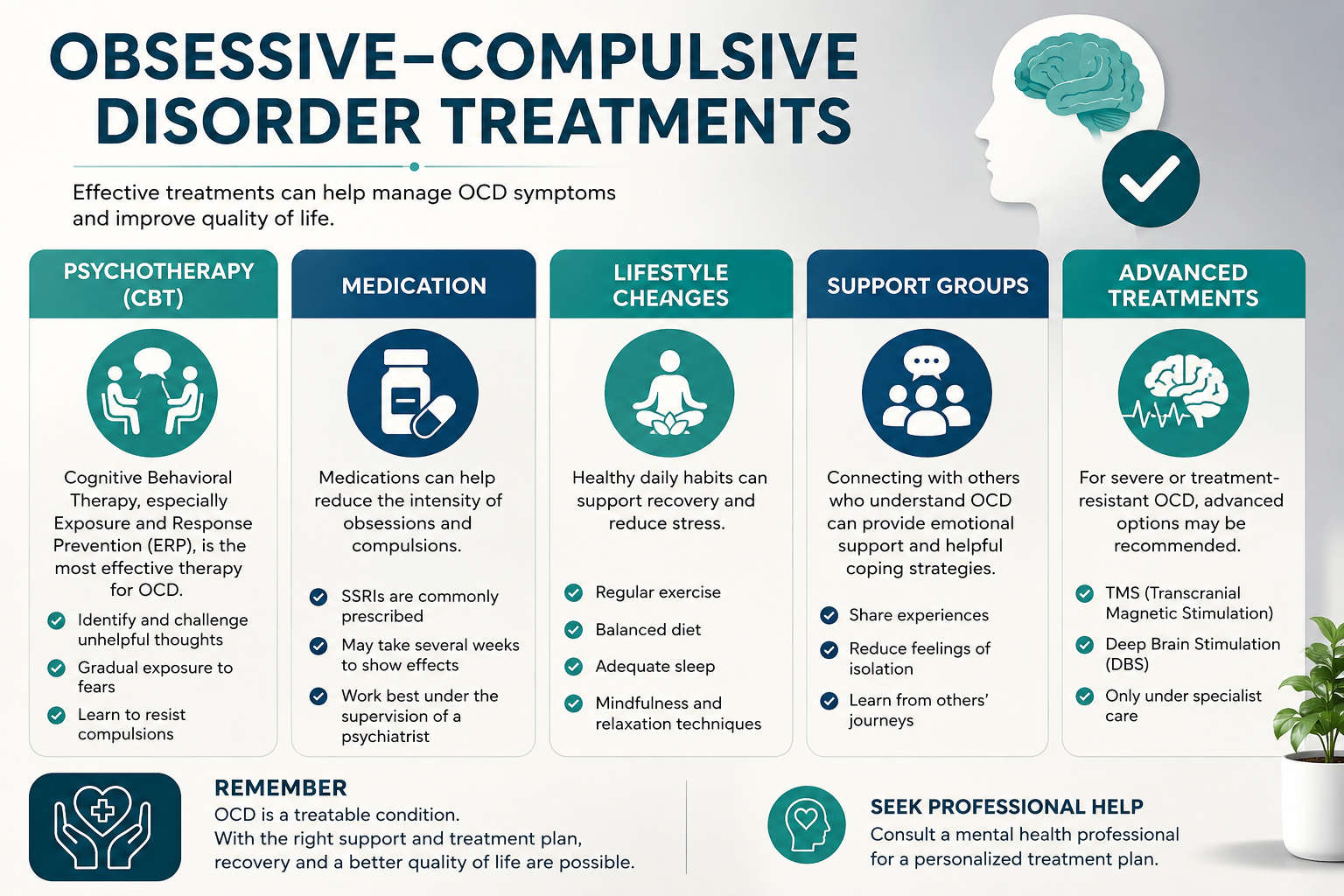
Mental health organizations around the world consistently recommend two primary approaches:
- Cognitive Behavioral Therapy (especially ERP)
- Medication
Many people benefit most from using both together.
Exposure and Response Prevention (ERP): The Gold Standard
Exposure and Response Prevention (ERP) is considered the most effective psychological treatment for OCD.
What Is ERP?
ERP gradually exposes individuals to situations that trigger obsessive thoughts while helping them resist performing compulsive behaviors.
For example:
A person afraid of germs may touch a doorknob and then avoid washing their hands immediately.
Initially, anxiety increases.
Over time, the brain learns that the feared consequence does not occur, and anxiety naturally decreases.
This process is called habituation and inhibitory learning.
Why ERP Works
ERP helps retrain the brain by breaking the cycle:
Obsession → Anxiety → Compulsion → Temporary Relief → Stronger OCD
Instead, the cycle becomes:
Trigger → Anxiety → No Compulsion → Anxiety Decreases Naturally
Repeated practice weakens OCD over time.
Cognitive Behavioral Therapy (CBT)
CBT helps people recognize distorted thinking patterns and replace them with healthier responses.
For OCD, CBT usually includes ERP because exposure exercises provide the strongest evidence for long-term improvement.
CBT also teaches:
- Managing uncertainty
- Challenging irrational beliefs
- Reducing perfectionism
- Identifying OCD triggers
- Developing healthier coping strategies
Medications Used to Treat OCD
Medication can reduce symptoms enough for people to participate more effectively in therapy.
The most commonly prescribed medications belong to a class called Selective Serotonin Reuptake Inhibitors (SSRIs).
Examples include:
| Medication | Common Brand Name |
|---|---|
| Fluoxetine | Prozac |
| Sertraline | Zoloft |
| Fluvoxamine | Luvox |
| Paroxetine | Paxil |
| Escitalopram | Lexapro |
| Citalopram | Celexa |
Another medication frequently used is:
- Clomipramine (a tricyclic antidepressant)
How Long Do Medications Take?
Unlike medications used for depression, OCD often requires:
- Higher doses
- Longer treatment periods
Many people notice improvement after:
- 6 to 12 weeks
- Sometimes up to 16 weeks
Medication decisions should always be made with a qualified healthcare provider because benefits, side effects, and medical history vary from person to person.
Combining Therapy and Medication
Research consistently shows that many individuals achieve the greatest improvement by combining:
- ERP therapy
- Medication
Benefits include:
- Faster symptom reduction
- Better long-term outcomes
- Lower relapse rates
- Improved daily functioning
For severe OCD, this combined approach is often recommended.
Lifestyle Habits That Support Recovery
Lifestyle changes cannot cure OCD, but they can improve resilience and support professional treatment.
Prioritize Sleep
Poor sleep can increase anxiety and worsen obsessive thoughts.
Aim for:
- Consistent bedtime
- 7 to 9 hours of sleep
- Limited screen time before bed
Exercise Regularly
Physical activity can reduce stress hormones and improve mood.
Helpful activities include:
- Walking
- Swimming
- Strength training
- Cycling
- Yoga
Even 30 minutes most days of the week can make a difference.
Practice Mindfulness
Mindfulness teaches people to notice thoughts without reacting to them.
Instead of trying to eliminate intrusive thoughts, mindfulness encourages acceptance of their presence while choosing not to engage with compulsions.
Mindfulness works best as a complement to ERP, not as a replacement.
Eat a Balanced Diet
There is no specific OCD diet, but healthy eating supports overall brain function.
Focus on:
- Fruits
- Vegetables
- Whole grains
- Lean proteins
- Healthy fats
- Adequate hydration
Reducing excessive caffeine may also help some people if it increases anxiety.
Family Support Plays an Important Role
Loved ones often unintentionally reinforce OCD by:
- Providing constant reassurance
- Participating in rituals
- Helping avoid feared situations
Family education helps create healthier support.
Helpful approaches include:
- Encouraging therapy participation
- Avoiding reassurance rituals
- Celebrating progress
- Being patient during recovery
- Learning about OCD together
Many therapists include family members in treatment planning.
Treatment for Children and Teenagers
Children with OCD respond well to specialized treatment.
Typical recommendations include:
- ERP with a trained child therapist
- Family involvement
- Medication when symptoms are moderate to severe
Parents should avoid punishing compulsive behaviors because children usually recognize the behaviors are excessive but feel unable to stop.
Early treatment often leads to better long-term outcomes.
When OCD Is Severe or Treatment Resistant
Some people continue experiencing significant symptoms despite standard treatment.
Additional options may include:
Intensive Outpatient Programs
These provide multiple therapy sessions each week and are often appropriate for moderate to severe OCD.
Residential Treatment
Residential programs offer structured daily therapy in a supportive environment for individuals whose symptoms significantly interfere with everyday life.
Deep Brain Stimulation (DBS)
In rare, severe cases that do not respond to conventional treatments, Deep Brain Stimulation may be considered.
This procedure involves implanting electrodes in specific brain regions to regulate abnormal neural activity.
It is reserved for carefully selected patients after extensive evaluation.
Transcranial Magnetic Stimulation (TMS)
Some individuals with treatment-resistant OCD may benefit from Transcranial Magnetic Stimulation.
TMS uses magnetic pulses to stimulate targeted brain areas without surgery.
Research continues to expand its role in OCD care.
What Recovery Really Looks Like
Recovery does not necessarily mean intrusive thoughts disappear forever.
Instead, successful treatment helps people:
- Spend less time on compulsions
- Experience less distress
- Return to work or school
- Build healthier relationships
- Enjoy hobbies again
- Live according to personal values rather than fear
Many people experience occasional flare-ups during stressful periods. Having a relapse prevention plan makes these episodes easier to manage.
How Long Does OCD Treatment Take?
Recovery varies from person to person.
A general timeline may look like this:
| Stage | Typical Time Frame |
|---|---|
| Initial assessment | 1 to 2 sessions |
| ERP treatment | 12 to 20 sessions or longer |
| Medication response | 6 to 12 weeks |
| Continued improvement | Several months |
| Maintenance | Ongoing as needed |
Some people continue occasional therapy sessions after major improvement to maintain progress.
Signs That Treatment Is Working
You may notice improvements such as:
- Less time spent performing rituals
- Reduced anxiety
- Better concentration
- Improved relationships
- Increased confidence
- Greater willingness to tolerate uncertainty
- Better work or school performance
Progress usually occurs gradually rather than overnight.
When Should You Seek Professional Help?
Consider speaking with a mental health professional if OCD symptoms:
- Take more than an hour each day
- Cause significant distress
- Affect work or school
- Damage relationships
- Lead to avoidance of normal activities
- Continue despite self-help efforts
Seeking treatment early often leads to better outcomes.
Tips for Finding the Right Therapist
When choosing a therapist, consider asking:
- Do you specialize in OCD?
- Are you trained in ERP?
- How often do you treat OCD patients?
- What does treatment typically involve?
- How do you measure progress?
Working with someone experienced in OCD treatment can make a significant difference.
Frequently Asked Questions
What is the most effective treatment for OCD?
Exposure and Response Prevention (ERP), a specialized form of cognitive behavioral therapy, is considered the most effective psychological treatment for OCD. Many people also benefit from combining ERP with medication.
Can OCD be cured permanently?
There is currently no guaranteed permanent cure for OCD. However, many people achieve long-term symptom control through therapy, medication, and healthy coping strategies.
Are medications necessary for everyone with OCD?
No. Some people improve with ERP therapy alone, while others benefit from medication or a combination of both. The best approach depends on symptom severity and individual circumstances.
How long does it take to recover from OCD?
Some individuals notice improvement within a few months, while others require longer-term treatment. Recovery depends on symptom severity, consistency with therapy, and individual response.
Can lifestyle changes replace professional treatment?
No. Healthy habits like exercise, good sleep, mindfulness, and stress management can support recovery but should not replace evidence-based treatments such as ERP or prescribed medication.
Conclusion
Living with OCD can be exhausting, but effective treatment is available. Decades of research show that evidence-based approaches, particularly Exposure and Response Prevention therapy, often combined with medication when appropriate, can dramatically reduce symptoms and improve quality of life. Recovery is rarely about eliminating every intrusive thought. Instead, it is about learning to respond differently, reducing compulsive behaviors, and reclaiming the freedom to live according to your values rather than your fears.
If OCD symptoms are interfering with your daily life, reaching out to a qualified mental health professional is an important first step. With the right treatment plan, patience, and ongoing support, lasting improvement is achievable for many people.