Antibiotics for Sinus Infection: Complete Guide to Treatment, Recovery, and Prevention
A sinus infection can make even simple daily tasks feel exhausting. Constant facial pressure, nasal congestion, thick mucus, headaches, and difficulty breathing can affect your sleep, work, and overall quality of life. Many people immediately wonder whether they need antibiotics for sinus infection, but the answer is not always straightforward.
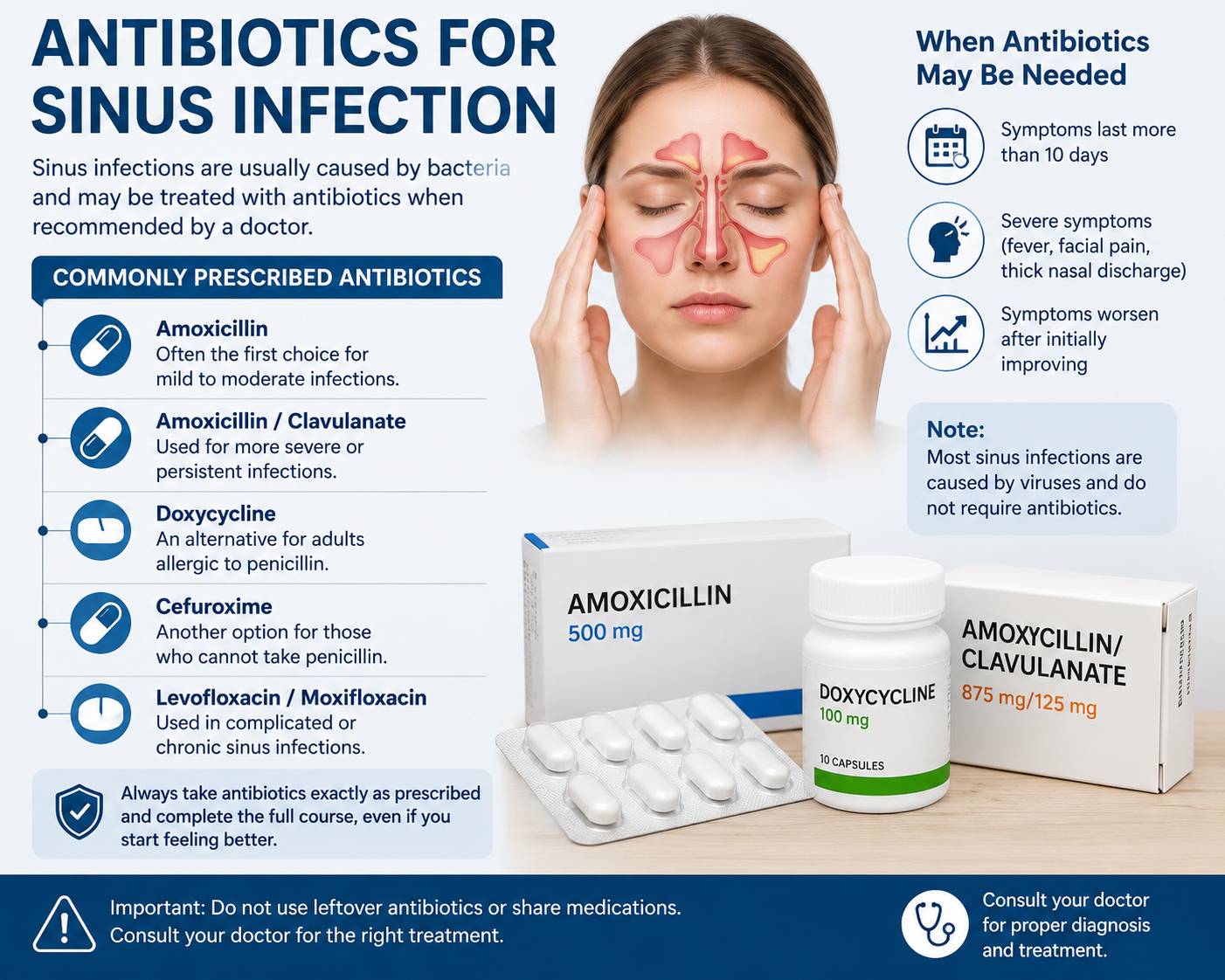
Most sinus infections are caused by viruses, meaning antibiotics will not help. However, bacterial sinus infections can benefit from antibiotic treatment when symptoms are severe, persistent, or worsen after initially improving. Knowing the difference can help you avoid unnecessary medications while getting the right treatment when you truly need it.
This guide explains when antibiotics are appropriate, which ones doctors commonly prescribe, how long recovery takes, possible side effects, and practical ways to feel better while your body heals.
What Is a Sinus Infection?
A sinus infection, also called sinusitis, occurs when the tissue lining the sinuses becomes inflamed and swollen. This inflammation blocks normal mucus drainage, allowing mucus to build up and sometimes leading to infection.
The four pairs of sinuses are located behind the:
- Forehead
- Eyes
- Nose
- Cheekbones
When these air-filled spaces become blocked, bacteria, viruses, or fungi may multiply, causing symptoms that range from mild discomfort to significant pain.
Types of Sinus Infections
Understanding the type of sinus infection helps determine whether antibiotics are appropriate.
Acute Sinusitis
- Lasts less than four weeks
- Usually caused by viruses
- Often develops after a common cold
Subacute Sinusitis
- Lasts 4 to 12 weeks
- May involve lingering inflammation
Chronic Sinusitis
- Lasts longer than 12 weeks
- Often related to allergies, nasal polyps, or chronic inflammation rather than bacterial infection
Recurrent Acute Sinusitis
- Four or more episodes each year
- Each episode resolves completely before another begins
What Causes a Sinus Infection?
Several conditions can trigger sinus inflammation.
Common causes include:
- Viral infections
- Bacterial infections
- Seasonal allergies
- Nasal polyps
- Deviated septum
- Air pollution
- Smoking
- Asthma
- Dental infections
- Weakened immune system
Viruses are responsible for the majority of sinus infections, especially those following a cold.
Do You Always Need Antibiotics?
No.
Most people do not need antibiotics because viral sinus infections improve on their own within 7 to 10 days.
Taking antibiotics when they are unnecessary does not speed recovery. Instead, it increases the risk of side effects and contributes to antibiotic resistance.
Doctors generally recommend antibiotics only when a bacterial infection is likely.
Signs Your Sinus Infection May Be Bacterial
Healthcare providers often look for these warning signs:
- Symptoms lasting more than 10 days without improvement
- Fever above 102°F (38.9°C)
- Thick yellow or green nasal discharge with severe facial pain lasting at least three to four days
- Symptoms improve and then suddenly worsen
- Severe facial swelling
- Significant pain around one side of the face
- Persistent bad breath with facial tenderness
These patterns suggest bacteria may be causing the infection rather than a virus.
Featured Snippet: When Are Antibiotics Needed for a Sinus Infection?
Antibiotics are generally recommended when sinus infection symptoms last more than 10 days without improvement, become severe with high fever and facial pain, or worsen after initially getting better. Most viral sinus infections do not require antibiotics and improve with supportive care.
Most Common Antibiotics Doctors Prescribe
The choice depends on your age, allergies, medical history, recent antibiotic use, and local bacterial resistance patterns.
Amoxicillin-Clavulanate
This is usually the first-choice antibiotic for bacterial sinus infections.
Benefits include:
- Effective against common bacteria
- Widely available
- Well studied
- Suitable for many adults and children
Treatment usually lasts:
- Adults: 5 to 7 days
- Children: 10 to 14 days
Doxycycline
Doctors may prescribe doxycycline for adults who cannot take penicillin.
It works against many bacteria responsible for sinus infections and is commonly used for penicillin allergies.
Respiratory Fluoroquinolones
Examples include:
- Levofloxacin
- Moxifloxacin
These antibiotics are generally reserved for more complicated infections or patients with limited treatment options because they carry a higher risk of serious side effects.
Cephalosporins
Certain cephalosporins may be appropriate in selected situations, particularly for children, depending on allergy history and local recommendations.
Antibiotics That Are Less Common Today
Some antibiotics are prescribed less often because bacteria have become increasingly resistant.
These include:
- Azithromycin
- Clarithromycin
- Trimethoprim-sulfamethoxazole
Your healthcare provider will choose the medication most likely to work based on current treatment guidelines.
How Long Do Antibiotics Take to Work?
Many people notice improvement within:
- 48 to 72 hours
Symptoms usually continue improving over the next several days.
However, complete recovery may take:
- One to two weeks
Even if you start feeling better, continue taking the medication exactly as prescribed unless your healthcare provider advises otherwise.
Stopping early may allow bacteria to survive and cause another infection.
What If Antibiotics Are Not Working?
If symptoms fail to improve after three to five days of treatment, contact your healthcare provider.
Possible reasons include:
- Viral infection instead of bacterial infection
- Antibiotic resistance
- Incorrect diagnosis
- Allergies causing symptoms
- Nasal polyps
- Fungal infection
- Dental infection
- Chronic sinus disease
Your provider may recommend additional testing or change your treatment plan.
Common Side Effects of Antibiotics
Most antibiotics are well tolerated, but side effects can occur.
Common side effects include:
- Diarrhea
- Nausea
- Upset stomach
- Vomiting
- Mild rash
- Yeast infections
Less common but serious side effects may include:
- Severe allergic reactions
- Persistent diarrhea due to Clostridioides difficile infection
- Liver problems
- Tendon injury with certain antibiotics
Seek immediate medical attention if you develop:
- Difficulty breathing
- Facial swelling
- Severe rash
- High fever after starting medication
- Bloody diarrhea
Risks of Taking Antibiotics Unnecessarily
Using antibiotics when they are not needed has significant downsides.
These include:
- Antibiotic resistance
- Unnecessary side effects
- Allergic reactions
- Increased healthcare costs
- Disruption of healthy gut bacteria
Responsible antibiotic use helps protect both individual and public health.
Home Treatments That Can Help
Whether your infection is viral or bacterial, supportive care often improves comfort.
Saline Nasal Irrigation
A saline rinse helps:
- Remove mucus
- Reduce congestion
- Improve breathing
- Flush allergens and irritants
Always use sterile, distilled, or previously boiled water for nasal irrigation.
Stay Hydrated
Drinking plenty of fluids helps thin mucus, making it easier to drain.
Good choices include:
- Water
- Herbal tea
- Warm broth
Use Steam
Warm steam may temporarily relieve congestion.
Try:
- Warm showers
- Steam from a bowl of hot water
- Humidifiers
Keep humidifiers clean to prevent mold growth.
Rest
Your immune system works more efficiently when you get enough sleep.
Aim for:
- Seven to nine hours of quality sleep each night
Warm Compresses
Applying a warm compress over painful sinuses may reduce facial discomfort.
Over-the-Counter Pain Relief
Depending on your health history, medications such as acetaminophen or ibuprofen may help reduce pain and fever.
Follow package directions or your healthcare provider’s recommendations.
Can Decongestants Help?
Short-term decongestants may provide temporary relief.
However:
- Nasal decongestant sprays should generally not be used for more than three consecutive days.
- Oral decongestants are not suitable for everyone, especially people with uncontrolled high blood pressure or certain heart conditions.
Always read medication labels carefully.
How to Prevent Future Sinus Infections
Simple habits can reduce your risk.
- Wash your hands regularly.
- Stay up to date with recommended vaccinations.
- Treat seasonal allergies.
- Avoid cigarette smoke.
- Use a humidifier during dry months.
- Drink enough water.
- Manage asthma effectively.
- Address structural nasal problems if recommended by an ENT specialist.
- Avoid close contact with people who have respiratory infections whenever possible.
When Should You See a Doctor?
Schedule a medical evaluation if:
- Symptoms last longer than 10 days.
- Fever is high or persistent.
- Facial swelling develops.
- Vision changes occur.
- Pain becomes severe.
- Symptoms repeatedly return.
- Over-the-counter treatments provide little relief.
- You have a weakened immune system.
When Is a Sinus Infection an Emergency?
Seek emergency medical care if you experience:
- Swelling around the eyes
- Double vision
- Confusion
- Difficulty staying awake
- Severe headache unlike previous headaches
- Stiff neck
- High fever with worsening symptoms
- Difficulty breathing
These symptoms may indicate rare but serious complications requiring immediate treatment.
Can Children Take Antibiotics for Sinus Infections?
Yes, but only when a healthcare provider determines a bacterial infection is likely.
Many childhood sinus infections are viral and improve without antibiotics.
Parents should never give leftover antibiotics or medications prescribed for another family member.
Children should complete the full prescribed course unless instructed otherwise by their pediatrician.
Frequently Asked Questions
How do I know if my sinus infection is viral or bacterial?
A viral infection usually improves within 7 to 10 days. A bacterial infection is more likely when symptoms last longer than 10 days, become severe with high fever, or worsen after initially improving.
What is the best antibiotic for a sinus infection?
Amoxicillin-clavulanate is commonly recommended as the first-choice antibiotic for uncomplicated bacterial sinus infections. The best option depends on allergies, age, medical history, and local bacterial resistance.
How quickly should antibiotics improve symptoms?
Many people begin feeling better within 48 to 72 hours, although complete recovery may take one to two weeks.
Can a sinus infection go away without antibiotics?
Yes. Most sinus infections are viral and resolve naturally with rest, hydration, saline rinses, and symptom management.
Can taking antibiotics too often be harmful?
Yes. Frequent antibiotic use increases the risk of antibiotic resistance, medication side effects, allergic reactions, and disruption of healthy gut bacteria.
Conclusion
Sinus infections are common, but antibiotics are not the answer for every case. Because most infections are caused by viruses, supportive care is often all that’s needed while the immune system clears the illness. When symptoms persist beyond 10 days, become severe, or worsen after initial improvement, healthcare providers may recommend antibiotics for sinus infection based on your individual symptoms and medical history.
The key to faster recovery is receiving the right diagnosis rather than requesting antibiotics immediately. If your symptoms are severe, recurrent, or not improving, seek medical evaluation. A personalized treatment plan can relieve symptoms, reduce complications, and help you recover safely while avoiding unnecessary antibiotic use