Ovarian Cyst Treatments: A Complete Guide to Medical Care, Surgery, and Recovery
Ovarian cysts are common, especially during the reproductive years, and most are harmless. Many develop as part of the normal menstrual cycle and disappear on their own without causing symptoms. However, some cysts become large, painful, or persistent and may require medical treatment.
Understanding ovarian cyst treatments can help you know what to expect after a diagnosis and when treatment is necessary. The right approach depends on several factors, including the type of cyst, its size, your age, symptoms, and whether you have reached menopause. While many cysts only need monitoring, others may require medication or surgery to prevent complications.
This guide explains the available treatment options, home care strategies, recovery expectations, and warning signs that should never be ignored.
What Is an Ovarian Cyst?
An ovarian cyst is a fluid-filled sac that forms on or inside an ovary. Most ovarian cysts are benign (noncancerous) and develop naturally during ovulation.
Many women never realize they have one because small cysts often cause no symptoms and are discovered during a routine pelvic exam or imaging test.
Types of Ovarian Cysts
Different types of cysts require different treatment approaches.
Functional Cysts
These are the most common and usually disappear without treatment.
They include:
- Follicular cysts
- Corpus luteum cysts
Dermoid Cysts
These benign cysts may contain hair, skin, or fatty tissue because they develop from reproductive cells.
Cystadenomas
These cysts form from the surface of the ovary and may contain watery or mucus-like fluid.
Endometriomas
These cysts develop in women with endometriosis and are sometimes called “chocolate cysts” because they contain old blood.
Polycystic Ovaries
Multiple small cyst-like follicles can occur in people with polycystic ovary syndrome (PCOS), which requires a different treatment approach than a single ovarian cyst.
Common Symptoms
Many ovarian cysts cause no symptoms.
When symptoms occur, they may include:
- Pelvic pain
- Lower abdominal discomfort
- Bloating
- Feeling of fullness
- Pain during intercourse
- Pain during bowel movements
- Frequent urination
- Irregular menstrual periods
- Lower back pain
Symptoms vary depending on the size and type of cyst.
Featured Snippet: What Is the Best Treatment for an Ovarian Cyst?
The best treatment for an ovarian cyst depends on its size, type, symptoms, and your age. Many functional cysts disappear on their own within a few months and only require monitoring. Painful, large, persistent, or suspicious cysts may require medication or surgery.
When Is Treatment Needed?
Not every ovarian cyst requires active treatment.
A healthcare provider may recommend treatment if:
- The cyst is large.
- It continues growing.
- It causes significant pain.
- It persists after several menstrual cycles.
- Imaging suggests it is not a functional cyst.
- There are concerns about ovarian cancer.
- The cyst twists the ovary or ruptures.
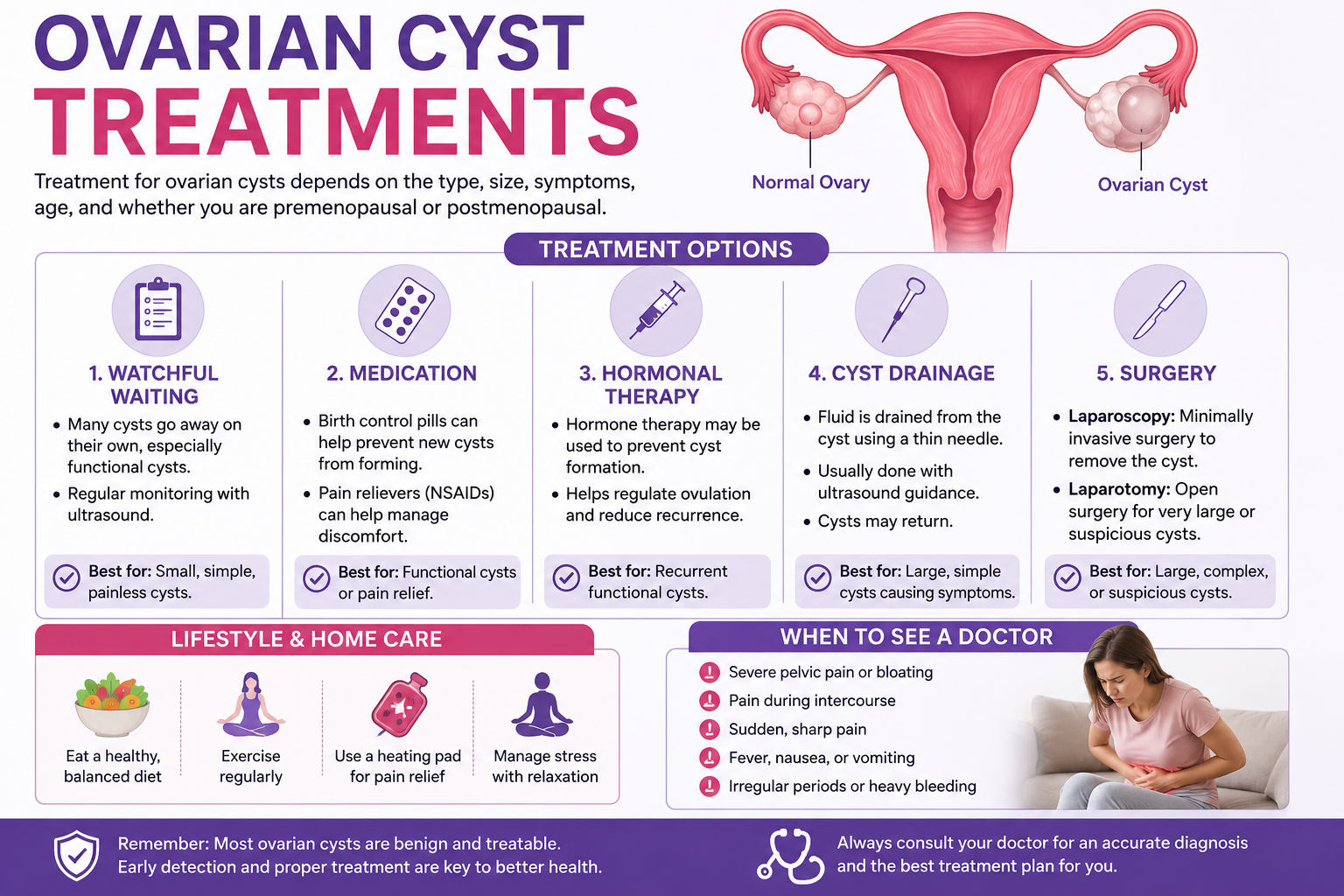
Watchful Waiting
Observation is often the first step for simple functional cysts.
Your healthcare provider may recommend:
- Repeat pelvic ultrasounds
- Follow-up appointments
- Monitoring symptoms at home
Many functional cysts disappear naturally within one to three menstrual cycles.
Medications for Ovarian Cysts
Although medication cannot make most existing cysts disappear, it may help manage symptoms or reduce the risk of future cysts.
Pain Relievers
Over-the-counter medications may help relieve mild to moderate discomfort.
Examples include:
- Acetaminophen
- Ibuprofen
- Naproxen
Always follow the recommended dosage and ask your healthcare provider if these medications are safe for you.
Hormonal Birth Control
Birth control pills may be recommended to:
- Prevent ovulation
- Reduce the chance of new functional cysts developing
- Help regulate menstrual cycles
Hormonal contraceptives generally do not shrink an existing functional cyst but may help prevent additional ones from forming.
Surgical Treatment
Surgery may be recommended when a cyst is:
- Larger than expected
- Persistent
- Causing severe symptoms
- Suspicious for cancer
- Twisted
- Ruptured with significant bleeding
The type of surgery depends on several factors.
Laparoscopic Surgery
This minimally invasive procedure involves several small incisions.
Benefits include:
- Less pain
- Smaller scars
- Shorter hospital stay
- Faster recovery
Many women return to normal activities within a few weeks.
Laparotomy
A larger abdominal incision may be necessary if:
- The cyst is very large.
- Cancer is suspected.
- There are surgical complications.
Recovery typically takes longer than laparoscopic surgery.
Treatment During Pregnancy
Many ovarian cysts discovered during pregnancy resolve naturally.
Treatment depends on:
- Size
- Appearance on ultrasound
- Symptoms
- Stage of pregnancy
Surgery may occasionally be necessary if the cyst is very large or causes complications.
Home Remedies for Mild Symptoms
Home care cannot remove an ovarian cyst, but it may reduce discomfort.
Helpful strategies include:
Apply Heat
A heating pad or warm compress placed on the lower abdomen may help ease pelvic pain.
Stay Active
Gentle movement such as walking or stretching may reduce stiffness and improve circulation.
Avoid strenuous exercise if it increases pain.
Drink Plenty of Water
Staying hydrated supports overall health and may help reduce bloating.
Eat a Balanced Diet
Choose foods rich in:
- Fruits
- Vegetables
- Whole grains
- Lean protein
- Healthy fats
A nutritious diet supports recovery and overall reproductive health.
Get Enough Rest
Fatigue may make discomfort feel worse.
Aim for consistent, high-quality sleep each night.
Can an Ovarian Cyst Go Away Naturally?
Yes.
Many functional ovarian cysts disappear within a few weeks to a few months without treatment.
Regular follow-up appointments help ensure the cyst is resolving as expected.
Possible Complications
Although uncommon, complications can occur.
Ovarian Torsion
A large cyst can cause the ovary to twist, cutting off its blood supply.
Symptoms include:
- Sudden severe pelvic pain
- Nausea
- Vomiting
This is a medical emergency.
Ruptured Ovarian Cyst
A ruptured cyst may cause:
- Sudden sharp pain
- Internal bleeding
- Abdominal tenderness
- Dizziness
Some ruptures require emergency treatment.
How Are Ovarian Cysts Diagnosed?
A healthcare provider may recommend:
- Pelvic examination
- Pelvic ultrasound
- Pregnancy test
- Blood tests
- MRI or CT scan in selected cases
- CA-125 blood test when appropriate, particularly after menopause or when cancer is a concern
These tests help determine the type of cyst and guide treatment.
Recovery After Treatment
Recovery depends on the treatment received.
After Watchful Waiting
Most women continue normal daily activities while monitoring symptoms.
After Laparoscopic Surgery
Many people recover within:
- One to three weeks
After Open Surgery
Recovery often takes:
- Four to six weeks
Your healthcare provider will advise when it is safe to return to work, exercise, and sexual activity.
Can Ovarian Cysts Be Prevented?
Not all ovarian cysts can be prevented, but certain measures may lower the risk of functional cysts.
These include:
- Regular pelvic exams
- Managing hormonal conditions
- Taking hormonal birth control if recommended
- Reporting new pelvic symptoms early
- Following up on previous ovarian cysts
When Should You See a Doctor?
Schedule an appointment if you experience:
- Persistent pelvic pain
- Pain during intercourse
- Increasing abdominal swelling
- Frequent urination
- Changes in menstrual cycles
- Recurrent ovarian cysts
- Symptoms that interfere with daily life
Prompt evaluation helps identify whether treatment is needed.
When Is an Ovarian Cyst an Emergency?
Seek immediate medical care if you develop:
- Sudden severe pelvic pain
- Fainting
- Severe dizziness
- Heavy vaginal bleeding
- Fever with pelvic pain
- Vomiting that will not stop
- Rapid breathing
- Signs of shock
These symptoms may indicate ovarian torsion, a ruptured cyst with significant bleeding, or another emergency requiring urgent treatment.
Frequently Asked Questions
What is the best treatment for an ovarian cyst?
The best treatment depends on the cyst’s type, size, symptoms, and your age. Many functional cysts resolve without treatment, while persistent or symptomatic cysts may require medication or surgery.
Can ovarian cysts disappear without surgery?
Yes. Most functional ovarian cysts disappear naturally within one to three menstrual cycles.
Do birth control pills shrink ovarian cysts?
Birth control pills generally do not shrink existing functional cysts, but they may help prevent new ones from developing.
How long does it take to recover after ovarian cyst surgery?
Recovery after laparoscopic surgery usually takes one to three weeks, while open surgery may require four to six weeks.
Are ovarian cysts cancerous?
Most ovarian cysts are benign. However, the risk of ovarian cancer increases after menopause, which is why persistent or suspicious cysts require careful evaluation.
Conclusion
Ovarian cysts are common, and most are not a cause for concern. Many resolve naturally without treatment, while others require careful monitoring, medication to manage symptoms, or surgery if they are large, persistent, or causing complications. Understanding ovarian cyst treatments helps you make informed decisions and recognize when medical attention is necessary.
If you experience ongoing pelvic pain, sudden severe symptoms, or changes that interfere with your daily life, don’t ignore them. Early evaluation allows healthcare providers to determine the cause, recommend the most appropriate treatment, and reduce the risk of complications while supporting your long-term reproductive health.