What Causes Dementia? A Complete Guide to Understanding the Causes, Risk Factors, and Prevention
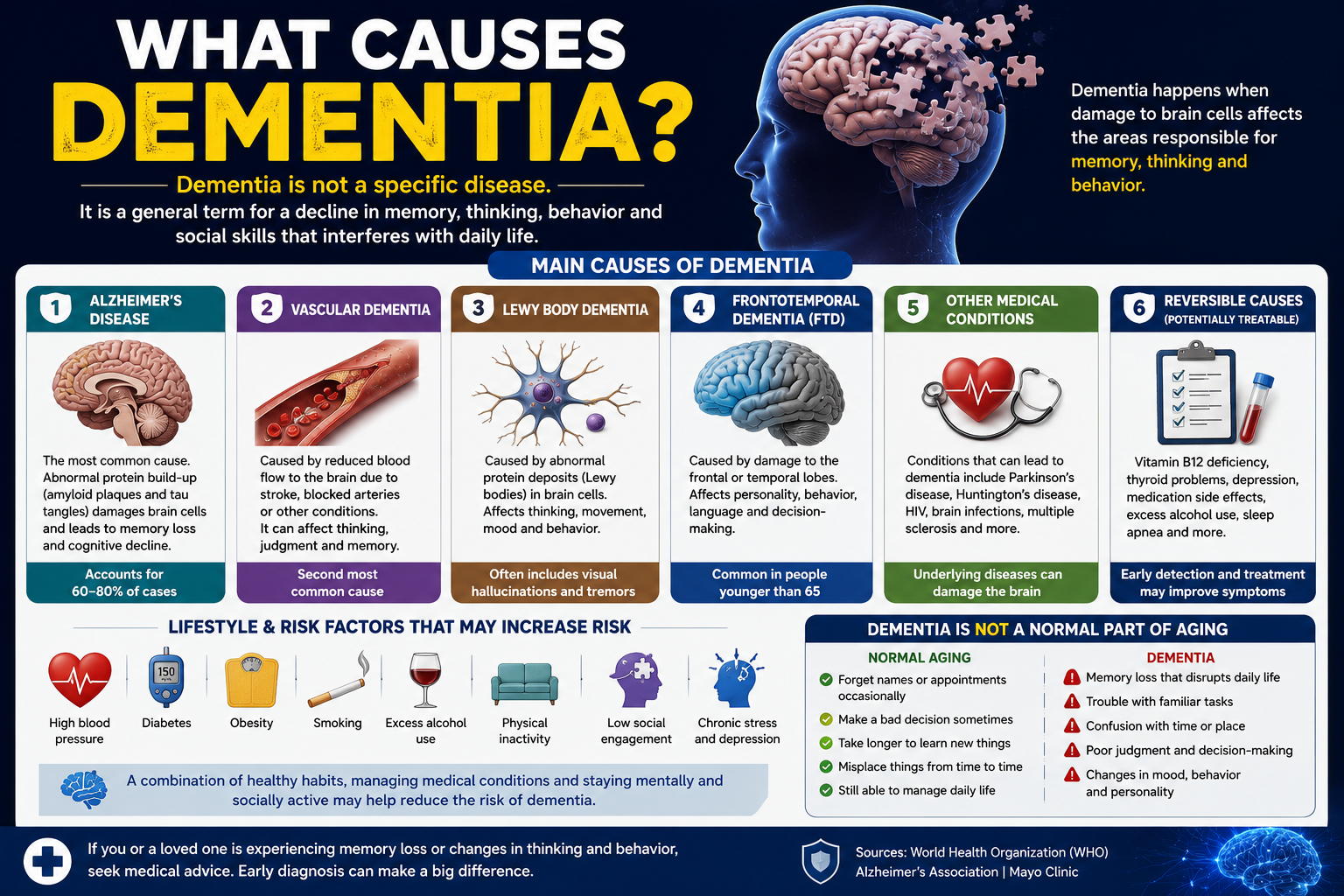
Dementia is not a single disease. Instead, it is a general term for a group of symptoms that affect memory, thinking, reasoning, language, and the ability to perform everyday activities. While memory loss is often the first sign people notice, dementia involves a gradual decline in cognitive function that can interfere with independence and quality of life.
Understanding what causes dementia is essential because there are many different conditions that can lead to cognitive decline. Some forms of dementia are progressive and cannot currently be cured, while others are caused by treatable medical conditions and may improve when the underlying problem is addressed. Age is the greatest risk factor, but dementia is not a normal part of aging.
This guide explains the most common causes of dementia, early symptoms, risk factors, diagnosis, treatment options, and lifestyle habits that may help reduce your risk.
What Is Dementia?
Dementia is a syndrome characterized by a decline in mental abilities severe enough to interfere with daily life.
It can affect:
- Memory
- Thinking
- Problem-solving
- Language
- Judgment
- Attention
- Personality
- Behavior
Symptoms usually develop gradually and worsen over time, although the rate of progression varies depending on the cause.
Featured Snippet: What Causes Dementia?
Dementia is caused by damage to brain cells that interferes with communication between different areas of the brain. The most common causes include Alzheimer’s disease, vascular dementia, Lewy body dementia, and frontotemporal dementia. Other medical conditions, infections, vitamin deficiencies, and brain injuries can also lead to dementia-like symptoms.
The Most Common Causes of Dementia
Several diseases and conditions can damage the brain and lead to dementia.
Alzheimer’s Disease
Alzheimer’s disease is the most common cause of dementia.
It is characterized by abnormal protein deposits in the brain, including amyloid plaques and tau tangles, which damage nerve cells over time.
Common symptoms include:
- Memory loss
- Difficulty finding words
- Confusion
- Poor judgment
- Personality changes
Symptoms usually develop slowly and gradually worsen over several years.
Vascular Dementia
Vascular dementia occurs when reduced blood flow damages brain tissue.
Common causes include:
- Stroke
- Multiple small strokes
- Chronic high blood pressure
- Diabetes
- Narrowed blood vessels
Symptoms often depend on the area of the brain affected.
People may experience:
- Difficulty planning
- Slowed thinking
- Poor concentration
- Memory problems
Lewy Body Dementia
Lewy body dementia results from abnormal protein deposits called Lewy bodies within brain cells.
Symptoms may include:
- Visual hallucinations
- Fluctuating alertness
- Movement problems similar to Parkinson’s disease
- Sleep disturbances
- Memory difficulties
Frontotemporal Dementia
This type primarily affects the frontal and temporal lobes of the brain.
Early symptoms often involve:
- Personality changes
- Loss of social awareness
- Poor judgment
- Changes in language
- Emotional changes
It tends to occur at a younger age than Alzheimer’s disease.
Less Common Causes of Dementia
Other conditions can also cause dementia or dementia-like symptoms.
These include:
- Huntington’s disease
- Parkinson’s disease dementia
- Creutzfeldt-Jakob disease
- HIV-associated dementia
- Normal pressure hydrocephalus
- Chronic traumatic encephalopathy (CTE)
- Brain tumors
- Multiple sclerosis in advanced cases
Medical Conditions That Can Cause Reversible Cognitive Problems
Some causes of memory loss and confusion are treatable.
Examples include:
- Vitamin B12 deficiency
- Thyroid disorders
- Certain infections
- Severe depression
- Medication side effects
- Alcohol misuse
- Liver disease
- Kidney disease
- Electrolyte imbalances
- Sleep apnea
Identifying these conditions early may improve cognitive function.
Risk Factors for Dementia
Several factors increase the likelihood of developing dementia.
Age
The risk increases significantly after age 65, although younger adults can also develop certain forms of dementia.
Family History
Having a close relative with dementia may increase risk, particularly in some inherited forms.
Genetics
Specific genes may increase susceptibility, although inheriting a risk gene does not guarantee that someone will develop dementia.
High Blood Pressure
Poorly controlled blood pressure can damage blood vessels in the brain over time.
Diabetes
High blood sugar can contribute to blood vessel damage and increase dementia risk.
High Cholesterol
Elevated cholesterol may contribute to vascular disease and cognitive decline.
Smoking
Smoking damages blood vessels and increases the risk of both stroke and dementia.
Obesity
Excess body weight during midlife has been linked to an increased risk of cognitive decline later in life.
Physical Inactivity
Regular exercise supports brain health and may lower dementia risk.
Excessive Alcohol Use
Long-term heavy drinking can damage the brain and contribute to memory problems.
Early Signs of Dementia
Symptoms vary depending on the underlying cause.
Common early signs include:
- Forgetting recent conversations
- Repeating questions
- Difficulty finding words
- Misplacing items frequently
- Poor decision-making
- Confusion about time or place
- Trouble following familiar instructions
- Personality changes
- Withdrawal from social activities
Occasional forgetfulness alone does not necessarily indicate dementia.
How Dementia Affects the Brain
Brain cells communicate through complex electrical and chemical signals.
In dementia:
- Brain cells become damaged.
- Connections between nerve cells weaken.
- Brain tissue gradually shrinks.
- Cognitive functions decline over time.
Different forms of dementia affect different brain regions, leading to varying symptoms.
How Is Dementia Diagnosed?
There is no single test that diagnoses every type of dementia.
Healthcare providers typically use a combination of:
- Medical history
- Physical examination
- Cognitive assessments
- Neurological examination
- Blood tests
- Brain imaging such as MRI or CT scans
- Specialized imaging or spinal fluid tests in selected cases
The goal is to identify the underlying cause and rule out treatable conditions.
Can Dementia Be Treated?
Although many forms of dementia cannot currently be cured, treatment may help manage symptoms and improve quality of life.
Treatment options may include:
Medications
Depending on the type of dementia, medications may help improve memory, thinking, or daily functioning for some people.
Managing Underlying Health Conditions
Controlling conditions such as:
- High blood pressure
- Diabetes
- High cholesterol
- Sleep apnea
may help slow further cognitive decline.
Cognitive Stimulation
Activities that challenge the brain may help maintain mental function.
Examples include:
- Reading
- Crossword puzzles
- Learning new skills
- Social interaction
Occupational Therapy
Therapists can suggest practical strategies to improve safety and independence.
Can Dementia Be Prevented?
There is no guaranteed way to prevent dementia, but healthy lifestyle choices may reduce the risk.
Exercise Regularly
Aim for at least 150 minutes of moderate physical activity each week.
Eat a Heart-Healthy Diet
Focus on:
- Fruits
- Vegetables
- Whole grains
- Fish
- Nuts
- Olive oil
- Legumes
Control Blood Pressure
Maintaining healthy blood pressure protects both the heart and brain.
Stay Mentally Active
Challenge your brain by:
- Reading
- Learning new hobbies
- Playing strategy games
- Continuing education
Stay Socially Connected
Regular social interaction supports emotional and cognitive health.
Get Quality Sleep
Treating sleep disorders and maintaining consistent sleep habits may benefit brain function.
Avoid Smoking
Quitting smoking benefits both cardiovascular and brain health.
Limit Alcohol
Moderate alcohol consumption or avoiding alcohol altogether may reduce risk.
Living With Dementia
A diagnosis of dementia affects both the individual and their loved ones.
Helpful strategies include:
- Maintaining daily routines
- Using calendars and reminders
- Simplifying tasks
- Keeping physically active
- Creating a safe home environment
- Building a support network
- Planning for future healthcare decisions
Early planning can improve quality of life and reduce stress for caregivers.
When Should You See a Doctor?
Schedule a medical evaluation if you or a loved one experiences:
- Persistent memory problems
- Difficulty managing daily activities
- Personality changes
- Confusion
- Trouble speaking or understanding language
- Frequent disorientation
- Changes in judgment
Early diagnosis may identify treatable causes and provide access to appropriate care and support.
When Is Memory Loss an Emergency?
Seek immediate medical attention if confusion or memory problems begin suddenly or are accompanied by:
- Weakness on one side of the body
- Difficulty speaking
- Vision changes
- Severe headache
- Loss of consciousness
- Seizures
- High fever
These symptoms may indicate a stroke, infection, or another medical emergency.
Frequently Asked Questions
What is the leading cause of dementia?
Alzheimer’s disease is the most common cause of dementia, accounting for the majority of cases worldwide.
Is dementia a normal part of aging?
No. While the risk increases with age, dementia is caused by disease or brain damage and is not a normal part of getting older.
Can dementia be cured?
Most forms of dementia cannot currently be cured, but treatments may help manage symptoms, improve quality of life, and address underlying conditions where possible.
Can lifestyle changes reduce dementia risk?
Yes. Regular exercise, a healthy diet, controlling blood pressure, avoiding smoking, staying mentally active, and maintaining social connections may help lower the risk.
What is the difference between dementia and Alzheimer’s disease?
Dementia is a general term for cognitive decline that interferes with daily life. Alzheimer’s disease is the most common disease that causes dementia.
Conclusion
Understanding what causes dementia is the first step toward recognizing symptoms early and seeking appropriate care. Alzheimer’s disease, vascular dementia, Lewy body dementia, and frontotemporal dementia are among the most common causes, but several treatable medical conditions can also lead to memory loss and cognitive changes. Because symptoms often overlap, a thorough medical evaluation is essential for an accurate diagnosis.
Although there is currently no cure for most forms of dementia, early diagnosis, healthy lifestyle habits, effective management of chronic conditions, and appropriate medical treatment can improve quality of life and help individuals maintain independence for as long as possible. If you notice ongoing memory or thinking changes in yourself or someone you love, don’t delay seeking professional medical advice.