How to Stop Heart Palpitations: Causes, Quick Relief, Treatment, and Prevention
Introduction
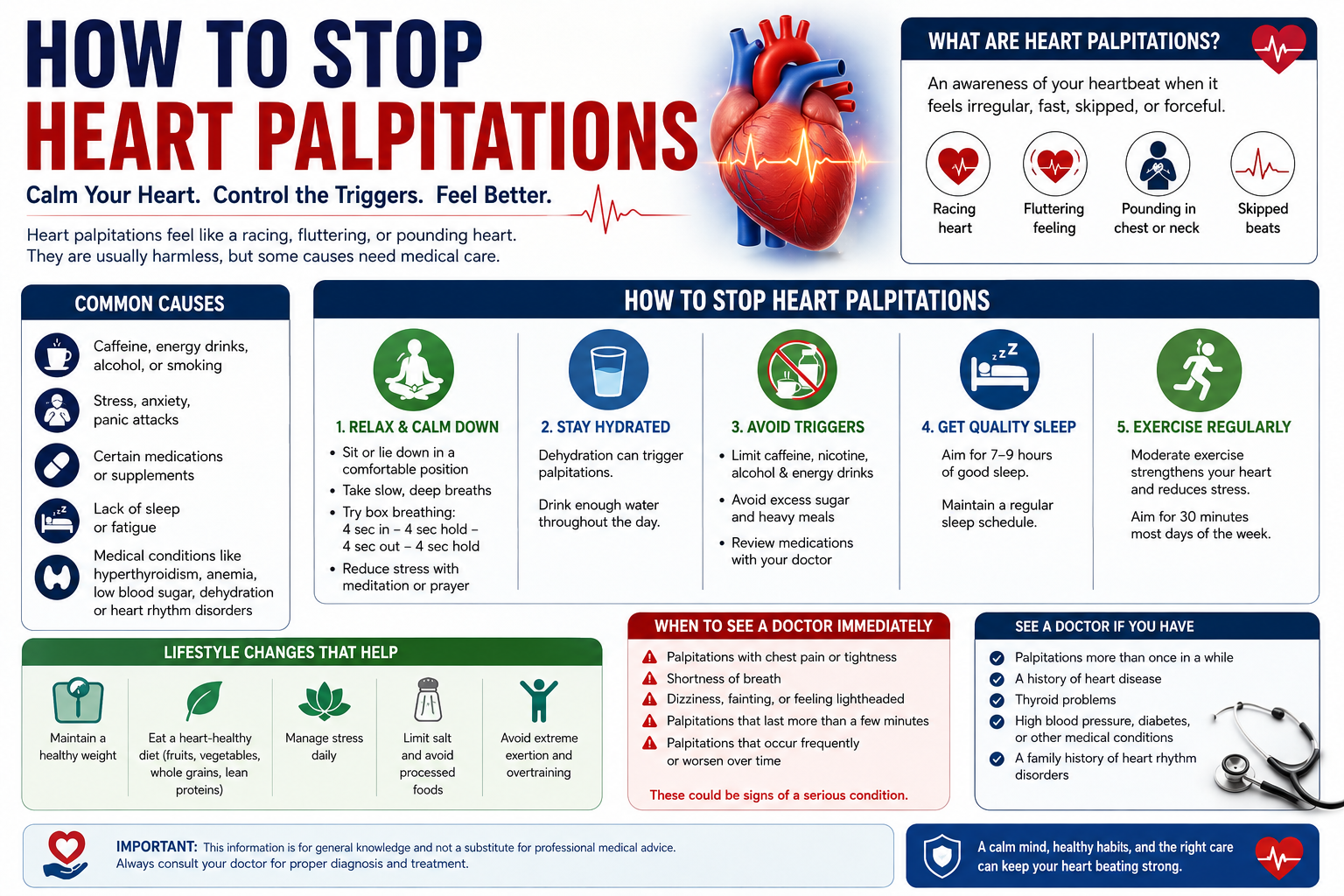
Heart palpitations can be alarming. Whether your heart feels like it’s racing, fluttering, pounding, skipping beats, or beating harder than usual, it’s natural to wonder if something is wrong. In many cases, palpitations are harmless and resolve on their own. However, they can sometimes signal an underlying medical condition that requires prompt attention.
Understanding how to stop heart palpitations starts with identifying what is triggering them. Stress, anxiety, caffeine, dehydration, medications, hormonal changes, and certain heart conditions are among the most common causes. While occasional palpitations are often not dangerous, persistent or severe episodes should always be evaluated by a healthcare professional.
This guide explains the causes of heart palpitations, ways to relieve them quickly, medical treatment options, prevention strategies, and the warning signs that should never be ignored.
What Are Heart Palpitations?
Heart palpitations are sensations that make you unusually aware of your heartbeat. They may feel like:
- Racing heartbeat
- Fluttering in the chest
- Skipped beats
- Pounding heart
- Flip-flopping sensation
- Rapid heartbeat
- Strong or forceful beats
You may notice them while resting, exercising, lying down, or during periods of stress.
Although palpitations often originate in the chest, some people feel them in the throat or neck.
Common Symptoms
Heart palpitations may occur with:
- Fast heartbeat
- Irregular heartbeat
- Chest fluttering
- Mild dizziness
- Shortness of breath
- Anxiety
- Sweating
- Lightheadedness
Symptoms can last from a few seconds to several minutes, although some episodes continue longer.
Featured Snippet: How Do You Stop Heart Palpitations?
To stop heart palpitations, sit down, take slow deep breaths, stay hydrated, avoid caffeine and nicotine, and try relaxation techniques if stress is the trigger. If palpitations are accompanied by chest pain, fainting, severe shortness of breath, or last longer than expected, seek immediate medical care.
What Causes Heart Palpitations?
Many different factors can trigger palpitations.
Emotional Stress and Anxiety
Stress causes the body to release adrenaline, which can increase heart rate and make your heartbeat feel stronger.
Common triggers include:
- Anxiety
- Panic attacks
- Emotional distress
- Lack of sleep
Caffeine
Large amounts of caffeine from:
- Coffee
- Energy drinks
- Tea
- Soft drinks
- Pre-workout supplements
may increase the likelihood of palpitations in some people.
Dehydration
Not drinking enough fluids can:
- Increase heart rate
- Lower blood pressure
- Affect electrolyte balance
Alcohol
Heavy alcohol intake or binge drinking can trigger irregular heart rhythms, sometimes referred to as “holiday heart syndrome.”
Nicotine
Smoking and vaping stimulate the heart and may increase the risk of palpitations.
Medications
Some medications can contribute, including:
- Asthma inhalers
- Decongestants
- Thyroid medication
- Certain antidepressants
- Stimulant medications
Never stop prescription medication without consulting your healthcare provider.
Hormonal Changes
Hormonal fluctuations during:
- Pregnancy
- Menopause
- Menstrual cycles
may contribute to heart palpitations.
Low Blood Sugar
Skipping meals or having diabetes-related low blood sugar can trigger symptoms.
Electrolyte Imbalances
Low levels of potassium, magnesium, or other electrolytes may affect the heart’s electrical activity.
Heart Conditions
Sometimes palpitations are linked to:
- Atrial fibrillation
- Supraventricular tachycardia
- Heart valve disease
- Cardiomyopathy
- Congenital heart conditions
These causes require medical evaluation.
How to Stop Heart Palpitations Quickly
The best approach depends on the underlying cause.
Take Slow Deep Breaths
Deep breathing helps activate the body’s relaxation response.
Try this method:
- Inhale slowly through your nose for four seconds.
- Hold your breath for two seconds.
- Exhale slowly through your mouth for six seconds.
- Repeat for several minutes.
Drink Water
If dehydration is contributing, drinking water may help restore normal heart rhythm.
Reduce Stress
Relaxation techniques may include:
- Meditation
- Mindfulness
- Gentle stretching
- Listening to calming music
- Progressive muscle relaxation
Stop Caffeine
Avoid additional caffeine until symptoms resolve.
If palpitations occur frequently after coffee or energy drinks, consider reducing your daily intake.
Avoid Smoking
Nicotine stimulates the cardiovascular system and may worsen symptoms.
Correct Low Blood Sugar
If you suspect low blood sugar, eat a balanced snack containing carbohydrates and protein, unless your healthcare provider has advised otherwise.
Rest
Sit or lie down until the episode passes.
Avoid strenuous activity if you’re feeling dizzy.
Can Vagal Maneuvers Help?
For certain rapid heart rhythms, a healthcare provider may recommend vagal maneuvers, which stimulate the vagus nerve and may help slow the heart rate.
Examples include:
- Bearing down as if having a bowel movement
- Splashing cold water on the face
- Gentle coughing
These techniques are not appropriate for everyone and should only be used if recommended by a healthcare professional.
Medical Treatments
Treatment depends on the cause.
Your healthcare provider may recommend:
Lifestyle Changes
- Reduce caffeine
- Manage stress
- Improve sleep
- Stay hydrated
- Limit alcohol
- Stop smoking
Medications
Depending on the diagnosis, treatment may include:
- Beta-blockers
- Calcium channel blockers
- Antiarrhythmic medications
- Thyroid treatment
- Anxiety treatment
Procedures
Some heart rhythm disorders may require:
- Catheter ablation
- Pacemaker implantation
- Cardioversion
- Implantable cardioverter-defibrillator (ICD)
These treatments are typically reserved for specific heart rhythm disorders.
How Are Heart Palpitations Diagnosed?
A healthcare provider may recommend:
- Medical history review
- Physical examination
- Electrocardiogram (ECG)
- Holter monitor
- Event monitor
- Blood tests
- Echocardiogram
- Stress test
These tests help determine whether the palpitations are harmless or related to a heart condition.
Foods That May Help Support Heart Health
A heart-healthy diet may reduce some triggers.
Choose foods rich in:
- Potassium
- Magnesium
- Fiber
- Omega-3 fatty acids
Examples include:
- Bananas
- Spinach
- Avocados
- Nuts
- Beans
- Salmon
- Oats
- Yogurt
- Leafy green vegetables
If you have kidney disease or another medical condition, ask your healthcare provider before increasing potassium intake.
Foods and Drinks That May Trigger Palpitations
Some people notice symptoms after consuming:
- Coffee
- Energy drinks
- Alcohol
- Sugary beverages
- Chocolate
- Highly processed foods
- High-sodium meals
Keeping a symptom diary may help identify personal triggers.
How to Prevent Heart Palpitations
Healthy lifestyle habits can reduce episodes.
- Stay hydrated throughout the day.
- Get seven to nine hours of sleep each night.
- Exercise regularly as recommended by your healthcare provider.
- Limit caffeine if it triggers symptoms.
- Avoid tobacco products.
- Moderate alcohol intake.
- Eat balanced meals.
- Manage stress with relaxation techniques.
- Keep chronic conditions such as high blood pressure and thyroid disease under control.
- Attend regular medical checkups.
When Should You See a Doctor?
Arrange a medical evaluation if:
- Palpitations occur frequently.
- Episodes last several minutes or longer.
- Symptoms are getting worse.
- You have a history of heart disease.
- New medications seem to trigger symptoms.
- Palpitations interfere with daily life.
When Are Heart Palpitations an Emergency?
Seek emergency medical care immediately if palpitations occur with:
- Chest pain
- Severe shortness of breath
- Fainting
- Loss of consciousness
- Confusion
- Severe dizziness
- Blue lips or skin
- Persistent rapid heartbeat that does not improve
These symptoms may indicate a serious heart problem requiring urgent treatment.
Frequently Asked Questions
Are heart palpitations always serious?
No. Many episodes are harmless and related to stress, caffeine, dehydration, or lack of sleep. However, frequent or severe palpitations should be evaluated by a healthcare provider.
Can anxiety cause heart palpitations?
Yes. Anxiety and panic attacks commonly increase adrenaline levels, which can cause a racing or pounding heartbeat.
How long do heart palpitations usually last?
They may last from a few seconds to several minutes. Longer or recurring episodes warrant medical evaluation.
Can dehydration trigger heart palpitations?
Yes. Dehydration can affect blood volume and electrolyte balance, making palpitations more likely.
Should I exercise if I have heart palpitations?
If palpitations occur during exercise or are accompanied by chest pain, dizziness, or fainting, stop exercising and seek medical advice. Otherwise, regular physical activity is beneficial for many people once serious heart conditions have been ruled out.
Conclusion
Heart palpitations are common and often harmless, especially when triggered by stress, caffeine, dehydration, or temporary lifestyle factors. Learning how to stop heart palpitations begins with identifying the cause, staying hydrated, managing stress, avoiding known triggers, and adopting heart-healthy habits.
Although occasional palpitations are usually not a cause for concern, persistent, worsening, or symptomatic episodes should never be ignored. If you experience chest pain, fainting, severe shortness of breath, or prolonged rapid heartbeats, seek emergency medical care immediately. A proper diagnosis ensures you receive the right treatment while protecting your long-term heart health.